The Cycle of Life (in Politics)

Cycle of Life (In Politics).001

Look at “goings on” since the 11/8/16 election, and it’s easy to get a quick snapshot of what I would call “The Cycle of Life (in Politics)”. It really doesn’t matter which party’s actions you observe, but paying more attention to the losing party [Democrat in this case] is usually more revealing. So here it is …

The Cycle of Life (in Politics)

For a person not currently holding public office, there is a preliminary stage before he/she enters the cycle — Explore.  This is the stage in which people who have long-since decided that they will enter a race say “I’m considering it, but I haven’t decided. The support I’m getting is overwhelming and humbling, and I really appreciate it, but I … [need to really think this through, need to consider the impact on my family, blah, blah, blah]”. The outcome is announcement of his/her candidacy pretty soon after this initial warm and fuzzy stuff, surrounded by cheering banner-holders with camera angles carefully managed to make the crowd appear much larger than it is. The best approach seems to be “After careful consideration, … the future of my country [state, city … whatever] is too important for me to pass up this opportunity to serve, … blah, blah, blah.”

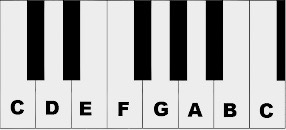
Once the candidaIMG_3327te is officially in the race, there are five stages in the cycle itself, with a sixth stage simply being the beginning of the next cycle — kind of like the seven-note musical scale, where an eighth note is the same as the first note, just one octave higher.  Whether the “higher” part applies to politics is a discussion for another day [I could argue that the correct parallel would be to compare to playing the musical scale downward, with the eighth note being an octave lower — as “things political” seem to be going lower and lower these days 😀]. I’ll cover the stages from the perspective of a Presidential election, but the basic principles apply to any election at any level of government. …
Campaign

For a person not currently holding public office, this stage begins immediately after the announcement, and at least a year before the election. In recent times, it’s more like a year and a half.  First, an “issue” needs to be invented if one doesn’t just drop into the candidate’s lap [the preexisting issue being something like a recently-declared shooting war or a 9/11-scale terrorist attack or a disease outbreak that killed at least tens if not scores of thousands of people]. Then it’s fundraising, hiring campaign staff, seeking endorsements, looking for opportunities to speak at gatherings of people, etc. If the backing of one of the two major parties is clear, the fundraising part becomes much easier, and if the party considers the race important enough, the candidate can almost just sit back and show up wherever they tell him/her to speak, and say whatever they tell him/her to say. Case in point: the 6/20/17 runoff race to replace Republican Tom Price [who vacated his House seat to become Secretary of Health and Human Services] in the district that includes the northern Atlanta suburbs — well over $50 million was spent on that one race for one seat in one district in America, and far and away the biggest percentage of that came from outside the state.

Anyway, the rest of this stage is pretty much what you see on TV.

Election

This is the fastest-moving part.  By this time, all the mud is slung in both directions and it is what it is. The candidate just gets his/her face on camera as much as possible, encourages people to vote, smiles a lot, etc. Usually by early evening that day, maybe late evening if it’s a close race, the outcome is known.  Acceptance and concession speeches are made, and the wheels of the remaining stages are already in motion [oftentimes even partially revealing themselves within the words and phrases of the acceptance and concession speeches].

Analysis

The parties of both the winning candidate and the losing candidate immediately get into analysis mode — what went right/wrong, who didn’t vote at all [or for our candidate] that we thought would do so [losing party], who voted [and for our candidate] that we thought wouldn’t [winning party], how do we explain and downplay the significance of the loss [losing party] or maximize “spin” from the win [winning party], etc.

Strategy

The analysis stage provides the seeds for a going-forward strategy.  Most recently, Democrats needed something to blame for the 11/8/16 loss besides an at-least-equally-flawed candidate [who was also a totally boring speaker who had no central campaign theme] and a campaign strategy that failed to recognize what was really going on in states they thought were shew-ins for them. Hence, “The Russians did it”, escalating to “Trump colluded with them”, etc. Their strategy [which so far is actually working reasonably well in some ways] is to 1) block everything they can that Trump tries to do and 2) keep the narrative going about the Russians, collusion, etc. [with the eager assistance, of course, of a largely liberal media]. The same logic applies to the winning party, but with the added component of solidifying their agenda, articulating it clearly, and navigating it through the Legislature. So far, the Republicans generally have not done this very well, but it appears that things may be beginning to “gel” on that front [the Republican victory in the above-mentioned race, and the Democrats’ failure to win any of several other special elections held to fill vacancies created by Administration appointments, will probably put a little grease on those skids].

Inauguration

Even if the candidate’s party [and he/she personally] touted “peaceful transition of power” during the final stages of the campaign, it may feed the narrative of the strategy to do things like not attend the inauguration, be supportive of demonstrations being organized, etc. Nowadays, anything that helps drive the chosen narrative and supports the chosen strategy is on the table — after what we’ve seen in the “no holds barred” atmosphere of the past seven months, there appears to be no point to which a party can stoop that is low enough to cause backlash.

Campaign

And so the previous cycle is complete and the new one has begun.  The campaign for the next election [regardless of whether the candidate just elected is up for re-election at that time or not — it’s a party thing] is literally underway the day after the election, not waiting until inauguration.  Not actual campaign ads at this point — just appearing on talking-head TV shows, writing editorials in newspapers, etc.: initial dialog diminishing the importance of the winning party’s victory [losing party’s principals] or touting the many reasons their candidate won [winning party]; gradual introduction of campaign sound bites and video clips that support the current narrative [both parties]; etc.

Well there you have it.  Why did I post this in the midst of more current-events-related posts? Simple. If the Swamp is ever to be drained, this cycle must be broken.  It’s the only way incentives of our elected officials will ever change.  My recommendation — term limits, for starters.

Thanks!

img_7026 Charles M Jones

Charles M. Jones

Enough Already!

s080249865-300I opened last week’s post with this heading: What Do We Need To See, Hear or Read Before We Say “Enough!”? [see that post at this link: Are There Any Limits To Anything Anymore?].  Well, I think we’ve seen it today.

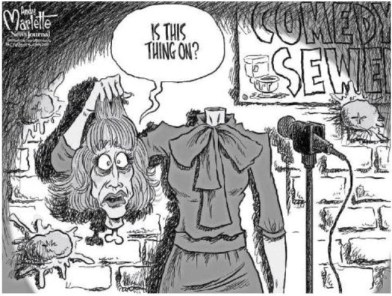
In that post, I referenced the vulgarities and vitriol spewing out of the mouths of Mss. Ciccone [Madonna] and Judd in their speeches at the 1/21/17 Women’s March, and Stephen Colbert’s 5/2/17 “comedy” monolog — and even worse, Kathy Griffin’s stupid social media posting of a photoshopped mock-up picture of herself holding a bloody severed head of President Trump.

Today, in a lunatic’s shooting rampage aimed at Republican members of Congress practicing for tomorrow’s annual Democrat-GOP baseball game for charity, four people were wounded, including a sitting United States Representative.  If you can imagine something possibly worse, consider what might have been the result of that rampage absent the quick thinking and heroic response of Capitol Police officers who were there. Almost all the media outlets and several congressmen/women interviewed observed that the rampage could easily have been a massacre of dozens or more of these Representatives. And … had Congressman Scalise [the injured Representative] not been there, these officers would not have been there because they were a part of his security detail [he is the Majority Whip, the third highest-ranking member of the House].

Are We Actually A Republic [i.e., A Representative Democracy]?

Not to wax philosophical, but there is more to this than meets the eye.  Philosophers tend to get into too much detail and offer too many optional views.  The way I see it, there are basically three main forms of government: democracy; republic (representative democracy); and totalitarianism. Absent a working version of one of these forms governing a population, the alternative is anarchy.

In theory, a true democracy can only work with an extremely small population.  The larger the population, the less practical a true democracy becomes [it would be logistically impossible to get a vote of all the people on every decision that is needed]. America was founded as a republic, a representative democracy. At a rapidly accelerating rate, our government is exhibiting many characteristics of totalitarianism [movement toward more central control, expanded powers of elected officials].

The Next Step?

So why would I mention all this in the context of these acts of disrespect and even hatred — and now actual homicidal violence toward elected officials? These are manifestations of anarchy. If you think America could not degenerate even further into anarchy, it would serve you well to pay more attention to events like those I referred to above and consider all of them in context with each other.  Perhaps an even more enlightened perspective could come from considering all them, in context with each other, and in context with the history of nations of the world over centuries. The logical answer to the chaos that anarchy brings is — you guessed it — totalitarianism.

I honestly hope that somehow, today’s event can be a trigger-point, something that wakes us all up and causes us to realize what we are becoming.  There is a tendency for the “togetherness” displayed immediately after events like this to be short-lived [look at the 2011 shooting of Congresswoman “Gabby” Giffords, or even 9/11, or Sandy Hook, or Orlando, or London, or … ]. The “sting” wears off, and we slip back into our pre-event mentality.

Particularly encouraging to me was the image I used as my picture for this post — Democrats, at their practice for tomorrow’s game, praying for the Republican victims of today’s tragedy. Also, the statements of the President, the Speaker and Minority Leader of the House, and other elected officials all stressed about as much solidarity — without partisan terminology — as I’ve seen in some time.

But, there was some evidence even late today that the “Kumbaya” atmosphere stemming from today’s shooting was nearing this “back to business” status before the evening news broadcasts were over [the “leak” from more “undisclosed sources” that special counsel Moeller is investigating President Trump for obstruction of justice; one of the media outlets was almost completely focused on this “news” during one of its primetime shows].

It’ll be interesting to see what dominates the “news” over the next few days, and whether there is any change in “tone” in partisan rhetoric.

img_7026 Charles M Jones

Charles M. Jones


Read This And Save Yourself A Lot Of Time

170516-james-comey-ac-855p_0b50cc00861259af65035991919a7e1e.nbcnews-ux-2880-1000

The 6/8/17 testimony of former FBI Director James Comey before the Senate Intelligence Committee is being hyped as much as the Super Bowl.  Democrats [and possibly some RINOs — Republicans In Name Only] are salivating, expecting the shoe [with Comey’s foot inside] to drop heavily on Trump, setting the stage for the final lap of their efforts to get him out of office so things can get back to what they consider to be “normal”.

Don’t bother to watch any of the live coverage or the endless expert panel discussions in the media that will continue regardless of the actual outcome of Comey’s appearance before the committee.  I can tell you now, the day before the event, exactly what all that will be [free — no extra charge 😀]

There Are Only Three Potential Outcomes

There actually are only three potential outcomes from Comey’s testimony. I’ll list them here in descending order of probability [opposite to the ascending order Trump’s detractors want to see]:

    1. No new news. Comey isn’t going to make himself indictable by saying that Trump pressured him to ease up on the Flynn [or any other] investigation [which is what his detractors are salivating for]. He is already on record as saying that hasn’t happened in his experience [“a situation where we were told to stop something for a political reason, that would be a very big deal. It’s not happened in my experience”]. If he changes that story, he would be indictable for perjury in the earlier testimony.  His answers will be either very vague [and therefore interpretable and “spun” any way both Trump’s supporters and detractors want to “spin” them] or something along the lines of “I can’t discuss that in an open session of this committee”. He will also be extremely careful to avoid inadvertently throwing out words and phrases that would shift the outcome to #2 below.
    2. Small tidbits of “new information” [actually, just fodder for more “fake news”].  Both supporters and detractors of the President will be listening very carefully for any word or phrase in Comey’s testimony that can be interpreted as exonerating Mr. Trump completely [supporters] or clearly indicating that the “smoke” is getting closer to the “fire” [detractors].
    3. The smoking gun Trump’s detractors have been waiting for. Clear, verifiable proof that Trump crossed the line and definitely obstructed justice [and is therefore impeachable]. This, of course, would be the Holy Grail Trump’s detractors desperately want.

If the outcome is #3, then Mr. Trump’s detractors [all Democrats — and some Republicans, mostly RINOs or “establishment” politicians”] will have won, the path to impeachment will pick up considerable steam, and the President’s agenda will essentially be tabled at least for the rest of this year.  If it is #1, there will be no appreciable change in media coverage other than the addition of speculation about what Comey didn’t say, or what he implied, or how evasive he was.  If it is #2, the media coverage will be more or less along the same divides by outlet or channel [a) obviously guilty, just not yet proven so; or b) just an innocent victim of a political witch hunt], but with huge amounts of “new” juicy content — “This simply heightens the need to continue this investigation until the ‘real truth’ [he’s guilty] comes out”, or “Surely we can now get past all this and move on to dealing with issues the American people want addressed”.

So there you have it. The whole scoop in this short post. I know my readers are grateful that I have saved them all the time they’d have spent finding this out by watching live coverage tomorrow and “post-mortem” coverage for at least days, probably weeks.

A Challenge

In closing, I’d offer this challenge.  … With all the free time I’ve given you: 1) read materials from both Democrats and Republicans on the real issues [the economy, tax reform, healthcare, immigration, terrorism, etc.] and draw your own conclusions as to which party’s positions are more in line with your own; and 2) begin actively “lobbying” your Senators and Representatives to push agendas that align with your views.

Thanks!

img_7026 Charles M Jones

Charles M. Jones


Are There Any Limits To Anything Anymore?

K Griffin CartoonWhat Do We Need To See, Hear or Read Before We Say “Enough!”?

I had never heard of Kathy Griffin until last week, but something about her posting of a now-published-worldwide mocked-up photo of herself holding a bloody, severed head of President Donald Trump was a “straw that broke the camel’s back” for me. The message in that imagery, whether intended or not, is that in her view, that’s what the President deserves — it could even be interpreted as an invitation to terrorists who have broadcast exactly that image [but with real pictures of real actions, not photoshopped composites]. Even worse, the “apology” video she posted the next day was about as sincere as Brian Williams’ 2015 apology for fabricating a story about his time in Iraq, calling it a “bungled attempt” to honor our service men and women. It was obvious that Ms. Griffin posted that apology only after her dumb post was denounced by everybody — even liberal media outlets — making it glaringly evident to her that she would be fired from CNN for doing such an irresponsible thing.  And one would think it couldn’t get worse still, but then she and Gloria Allred [her attorney, the high-profile lawyer who would defend the murderer of her grandmother if it meant getting national attention in the media], had a “press conference” in which Ms. Griffin was painted as the victim.  Get this [excerpts from that press conference]:

“I’m not afraid of Donald Trump. He’s a bully. I’ve dealt with old, white guys trying to keep me down my whole life, my whole career.    A sitting president of the United States, and his grown children, and the First Lady are personally, I feel, trying to ruin my life forever,” Ms. Griffith said, as she lamented being under investigation by the Secret Service.  Gloria Allred said the actions (presumably the Secret Service investigation) were “unpresidential” and that no other first family has taken issue with humor attacking a sitting president.

Now rewind to the Women’s March on 1/21/17, the day after Mr. Trump’s inauguration, and the extremely vulgar and inflammatory remarks made by Ms.Ciccone [Madonna] and Ms. Judd [see my post Women’s March Speeches]. Get this:

Ms.Ciccone [Madonna] … “It took us this darkness to wake us the f*** up.Today marks the beginning. … The revolution starts here. … And to our detractors that insist that this March will never add up to anything, f*** you. F*** you. … Yes, I’m angry. Yes, I am outraged. Yes, I have thought an awful lot of blowing up the White House.”

Ms. Judd. … The I Am A Nasty Woman “poem” she read was full of vulgar terminology [and I don’t mean just four-letter words]. I don’t want to quote any of it here.

Now fast forward to 5/2/17, to Stephen Colbert’s extremely vulgar and derogatory remarks about President Trump in his “comedy” monolog. Get this …

“Mr. Trump, your presidency — I love your presidency. I call it ‘Disgrace the Nation.’ You’re not the POTUS — you’re the BLOTUS. You’re the glutton with the button. You’re a regular ‘Gorge’ Washington. You’re the presi-dunce, but you’re turning into a real prick-tator. Sir, you attract more skinheads than free Rogaine. You have more people marching against you than cancer. You talk like a sign language gorilla who got hit in the head. In fact, the only thing your mouth is good for is being Vladimir Putin’s c**k holster. Your presidential library is gonna be a kids menu and a couple of ‘Jugs’ magazines. The only thing smaller than your hands is your tax returns. And you can take that any way you want.”

Are There Any Limits To Anything Anymore?

This kind of filth is being plastered across “news”paper headlines and TV screens around the clock, with talking-head “news” anchors as the messengers and panels of “experts” debating whether the First Amendment gives these people the right to say whatever they want without regard to how it might affect others [young children, for example, who might be just walking through a room where their parents are watching the “news”]. I’d be willing to bet that not a single one of our Founding Fathers involved in development of our Constitution and Bill of Rights envisioned anywhere near the level to which civility and decent-mindedness would have degraded 240 years later — or would agree today that this kind of vulgar and disrespectful language would be supported by the First Amendment they wrote. {I enclosed “news” in quotes because that term is used very loosely these days — see these past posts expanding on that issue: News or NNTN?Fake News Or Just Meaningless News?.}

Enough already! We need a movement, just as Ms. Ciccone said. But the movement we need is not the revolution she described — it’s a revolution focused on returning some degree of sanity to both what is happening and how the “news” of what is happening is reported. If we continue down the path we have been following in recent years, we are doomed.

img_7026 Charles M Jones

Charles M. Jones

Fixing The ACA Mess: Calling A Spade A Spade

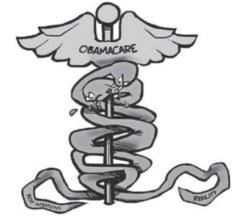
caduceus-obamacare-cartoonTrue or False: All of our elected leaders would honestly like to come out of the “Repeal/Replace The ACA” versus “Fix/Enhance the ACA” war with a bipartisan solution that provides the best possible care for Americans at the lowest possible cost that we can afford. They just have differing views on what is the best way to reach that goal. … Unfortunately, as much as we might like to think the answer is “True”, it is “False”.

So What Outcome Would They Honestly Like?

For each Legislator, regardless of party affiliation, the short answer is two-fold [listed here in descending order of importance]: 1) “a solution that maximizes my personal chances of being re-elected”; and 2) “a solution that maximizes my party’s chances of keeping or gaining control of the Senate, the House, and the Presidency”. Personally, I honestly believe President Trump wants the more altruistic outcome [“True” above], but he is quickly learning that, absent a complete “draining of the swamp” first, it will be politics [“False” above] that drives the process.

Getting rid of these political drivers [so that logical thinking could creep into the minds of our leaders] would require one of two things: 1) at least eight Democrats in the Senate who would get on board with a bill that is characterized as Repeal/Replace; or 2) at least three Republicans in the Senate who would get on board with a bill that is totally void of even a hint any Repeal/Replace terminology and characterized more like “making the ACA even more perfect than it already is”. If #1 happens, I will assume that these eight Democrats will have gotten insider information about an approaching meteor that will completely destroy our planet before they are up for re-election. There is a better chance that #2 could happen, but when push comes to shove, I seriously doubt that it will. So since politics will likely continue to drive the process, let’s see if there is a logical, straightforward approach that even a dyed-in-the-wool career politician may be able to grasp conceptually. My hope is that any who do will be able to pursue this approach, package it however necessary to make it politically palatable to their colleagues, and move us toward a workable and sustainable solution.

It’s Not Rocket Science!

Note. I have written extensively on the subject of repealing and replacing the ACA [numerous blog posts, much of the content of which has been captured in this special page at this site: Repealing And Replacing The ACA].

It is incomprehensible to me that all legislators, in both parties, seem to be failing to grasp the easiest way to simplify the whole Repeal/Replace The ACA process: break current enrollees down into the three categories that are driving the costs, and proceed to tackle those three areas separately [but still simultaneously]. The three areas? … 1) Medicaid/CHIP expansion [CHIP, the Children’s Health Insurance Program, provides low-cost health coverage to children in families that earn too much money to qualify for Medicaid], 2) people who have obtained coverage under the ACA because they could not obtain coverage any other way, and 3) all other people who obtained coverage through the ACA exchanges.

Pinning down the total number of people who have health insurance obtained under the ACA, either because the expanded Medicaid/CHIP coverage made them eligible or because they purchased it through the Federal exchange or one of the State exchanges, is a task that requires more time than I was willing to consume to make my point in this post. So let’s just use the number all the “keep the ACA” folks keep yelling and say it’s 24 million people. Now let’s break that number down into the above three categories. …

Category 1 is the most accurately quantifiable of these categories. 17.1 million people have been added to Medicaid/CHIP rolls since passage of the ACA and phase-in of these features within it [Source: Medicaid.gov]. This could be overly optimistic, though [in terms of attribution to the ACA], because some sources estimate that as many as 2.1 million of these enrollees were eligible for these programs before passage of the ACA, but not enrolled [e.g., because they didn’t know they were eligible]. Since using the higher number could make it appear that I might be “fudging” to make my point, let’s just say there are 15 million people in this category [17.1 million minus 2.1 million].

Category 2 is almost impossible to quantify to any reasonable degree of accuracy because there is no way to trace why any particular enrollee obtained coverage through the Federal exchange or one of the State exchanges — i.e., because he/she found it more convenient, or because he/she had no other way to obtain coverage. The highest estimate I have found of the percentage of people obtaining insurance through the ACA exchanges because they could not get a policy any other way is 82% [I have referenced sources in previous posts on repealing/replacing the ACA]. To keep things simple, let’s just use that high-end estimate.  82% of 9 million [24 million minus the 15 million in category 1] puts 7.4 million in this category.

Category 3, of course, is dependent on how many enrollees are in Category 2. Under the logic described under category 2, there are 1.6 million people in this category [9 million minus 7.4 million].

Next, let’s recognize a fact that seems to be eluding all lawmakers: the people in category 1 are there not because of the bulk of the content of the ACA and all its complexities, but because of expanded eligibility for entitlement programs that were in operation decades before the ACA became law. Their coverage could have been provided through passage of a one-page law that simply expanded the eligibility thresholds for those programs and provided exactly the same Federal reimbursements to the States that are outlined in the ACA.

There’s another thing that none of our legislators seem to realize [or if they do, they are (surprisingly) not articulating their thoughts about it in media interviews]. Comparing how many people would be covered X years from now under the [new] AHCA with how many would be covered under the [current] ACA is a ridiculously meaningless statistic because the ACA is not sustainable in its current form [even Democrats reluctantly (and tactfully) agree with that].

So What’s The Deal?

So if all the Chicken Little “The sky is falling!” legislators could just dispense with that rhetoric, and if the RINO [Republican In Name Only] element of the Republican party could take this simplified [and I would argue, more accurate] view of the task at hand, it should be possible to actually come to a bipartisan solution built around two components: 1) deciding whether to continue funding expanded Medicaid/CHIP coverage [which will affect people in category 1]; and 2) developing a new healthcare financing system that deals with people in categories 2 and 3. To the extent passage of the resulting law causes people in any of the three categories to initially lose their coverage, just call a spade a spade [i.e., “We simply can’t afford the cost of that big an expansion of the decades-old Medicaid/CHIP programs” for people in category 1] and include a transition or bridge plan for people in categories 2 and 3 that avoids abrupt coverage loss and allows them to transition to the new system outlined by the AHCA.

The Chinese philosopher Lao Tzu said “If you do not change direction, you may end up where you are heading.” I hope our legislators realize the truth in this statement, as well as the truth in Lewis Carroll’s statement “If you don’t know where you’re going, any road will take you there”. Right now, our legislators are frantically trying to put together a politically palatable solution [which means they’re simply shifting with the wind]. It’s time to wake up and get this done!

img_7026  Charles M Jones

Charles M. Jones

1st Amendment, Responsibility, and Common Decency

I am writing this post after seeing news coverage of the “walkout” that occurred when Vice President Pence began delivering his commencement address at Notre Dame last weekend. The fact is that it was only “several dozen” [out of 2,081] graduates who got up and walked out as Mr. Pence began his address. But the New York Times reported it like this: “Online video of the ceremony showed a large number of young people filing out of the stadium as the vice president began to congratulate the graduates and their families. Around them, the audience erupted into a mixture of boos and applause“. Now, if you Google “Pence Notre Dame commencement speech”, the only items that show up have to do with the demonstrations — interviews with the students, why they did it, how they “feel”, etc. As I watched the video of the actual news coverage, I saw no “eruption” of the audience, either the boos or the applause.

At least they weren’t shouting and throwing things, so maybe I should be thankful for that and just put my troubled thoughts about the event down. After all, these graduates were “exercising their First Amendment right” to express their displeasure with Trump Administration policies with which they do not agree [and perhaps with some of Mr. Pence’s stated positions on certain issues]. However, there is much more to this particular demonstration than meets the eye.

I’ve alluded to distorted media reports in several of my blog posts [see News [or NNTN?] Circa 2017 and Fake News Or Just Meaningless News? for just two examples].  My concern here is the disrespect these students showed toward the Vice President of our country. This honorable and decent man a) came at the invitation of the leadership of their university; b) was the first U. S. Vice President to deliver a commencement address at that university; and c) is one of only about seven millionths of one percent of all U. S. citizens who have ever lived to become first in the line of succession to the highest office in the world. Those things alone should have engendered enough respect for Notre Dame’s leadership, and for this man, to prompt these students to seek less blatant, less in-your-face ways to express their disdain for the policies they attribute to the President and/or to him.

I wonder how many of these students actually know the genesis of the very right they were exercising, and how many gave any thought to whether this method of exercising it was the best way to do so, and how many gave any consideration at all as to whether negative impressions of them because of their chosen tactic might outweigh any positive impact other tactics might have had in addressing their concerns? My guess is that for most if not all of these questions, the answer is “None”.

The First Amendment And The “Bill Of Rights” — Roots

There’s a very good reason why the first ten Amendments to the constitution are collectively referred to as the Bill of Rights. As you read through them, it becomes very clear that at least some of our Founding Fathers, particularly at the State level, wanted to ensure that, as the new Federal government developed, these basic rights didn’t get lost in the shuffle. They were proposed following an oftentimes bitter 1787–88 battle over ratification of Constitution, and had been crafted to address the objections raised by Anti-Federalists, adding to the Constitution specific guarantees of personal freedoms and rights, clear limitations on the government’s power in judicial and other proceedings, and explicit declarations that all powers not specifically delegated to Congress by the Constitution are reserved for the states or the people. They were officially ratified in 1791, two years after the original constitution was approved by Congress [subject, according to Article VII, to ratification by nine of the thirteen States — so actually, this Bill of Rights essentially became a requirement for reaching that level of ratification].

I think there’s also a very good reason why the very first of those ten Amendments has to do with freedom of speech — specifically, it prohibits the making of any law respecting an establishment of religion [a tenet which nowadays is grossly over-interpreted by many as “separation of Church and State”], ensuring that there is no prohibition on the free exercise of religion, abridging the freedom of speech, infringing on the freedom of the press, interfering with the right to peaceably assemble, or prohibiting the petitioning for a governmental redress of grievances. Having the right to express our opinions freely, without fear of reprisal, is clearly a fundamental concept woven into the documents defining our nation.

But With Rights Come Responsibilities

However, I believe anybody should be able to agree that there are at least some bounds within which our exercise of this [or any other] right should be carried out. Most obviously, it is highly doubtful that the framers of our founding documents, by including this right, thought that people exercising them would destroy property or cause physical injury to others. But on most days, if there is no example that day, you wouldn’t have to go back more than a few weeks at most to find several examples of exactly that kind of violence in demonstrations — e.g., demonstrations at Berkeley University just last month, many Black Lives Matter demonstrations, etc.

The missing element in all of this is respect for others, and the ever-present common element is narcissism — complete focus on what I think is best, without regard for other people’s views and feelings. That’s most interesting — the very behavior people accuse our President of exhibiting is apparent in their own behavior. I guess there’s a lot of good common sense in the old saying “What goes around, comes around”.

Thanks!

img_7026 Charles M Jones

Charles M. Jones

Like Watergate? Surely They Jest!

politicainIt has been most interesting over the past week to try and get above the “trees” where it seems the attention of everybody in the media is focused since President Trump’s firing of FBI Director Comey and look at the “forest” in which those “trees” are growing — i.e., look for the bigger picture, the broader perspective. I think the effort has paid off, and in this post I’ll share some of that payoff.

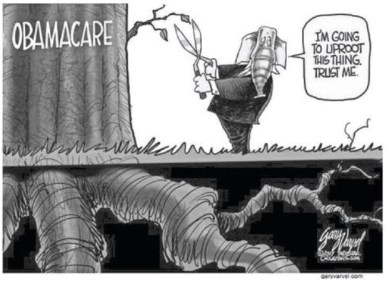
Ignoring all the “spin” in the mostly liberal-leaning media coverage, it seems to me that the only questions that matter about the Comey firing are the following:

    1. Did Trump have the authority to fire Comey?
    2. Did Comey deserve to be fired [moot if the answer to question 1 is “Yes”]?
    3. Ignoring all speculation, are there any known, provable facts that would indicate that Comey’s firing was motivated by anything other than honorable intentions — e.g., to ensure that the FBI’s reputation gets out from under the “cloud” that Comey has created, to ensure that key principals in the current administration are the best people to have in their roles, etc?

Let’s briefly consider each of these questions.  On question 1, I don’t think I’ve heard a single person, even among Democrats, say that the President does not have the authority to fire the FBI Director [for any reason, whether with specified justifying rationale or not].

Although the “Yes” answer to question 1 makes question 2 moot, I’ll point out some things that I believe make the obvious answer to it “Yes” as well. I’m hearing almost nobody arguing that Comey did not deserve to be fired, and I certainly count myself among those that don’t think that’s an issue. All of the arguments regarding appropriateness are focused on the timing — i.e., why now? why not as soon as Mr. Trump was inaugurated? And, even those arguments relate to how the decision was made and how it was communicated — i.e., who communicated what about it, and when, and do all the statements from the Administration, including Mr. Trump’s, line up with each other?

For anybody interested in the details of Comey’s actions that strongly support the president’s decision to fire him, I’d suggest watching a video clip of the 7/5/16 announcement he made regarding the investigation into Hillary Clinton’s private email server issue [click this link for a list of at least seven offenses Comey cited in that announcement: Comey – List of HRC Offenses]. … For the video itself, click this link: Comey – Video]. Many legal experts have since indicated that these seven and possibly other offenses cited in that announcement were law violations that would have resulted in indictments against any other public official.

So it comes down to question 3. … The only reasoning people behind all the commotion posit for their outrage is their suspicion about whether the action was part of a “cover-up” of the investigation into whether there was Russian collusion with the Trump campaign and whether any such collusion, if it existed, directly affected the outcome of the election. I would be among the first to say that an investigation into that issue [potential meddling by the Russians or anybody else into American elections] is needed if initial evidence-gathering suggests more than just “potential” meddling. However, it should be clear to anybody looking at all this objectively that this whole matter is being driven by the Democrats who still can’t accept the fact that they lost the election not because a boogeyman stole it, but because 1) their candidate was not the “least despicable of them all” [see my post Mirror, Mirror, On The Wall ,..] and 2) their campaign message and operational strategy were not as effective as Trump’s. If they hadn’t zeroed in on the story that Hillary Clinton’s loss was because the Trump campaign was colluding with the Russians to undermine her credibility, they would have found some other boogeyman to blame and the media would be abuzz with that storyline today.

So Does This Really Compare With Watergate?

The short answer is “No, not by a long shot”. As usual on every hint of any issue that can continue to drive the Russian conspiracy narrative, the “all from the same script” unanimous cry from the Democrats is that this is “Watergate”, and it’s now clear that a special prosecutor must be appointed to get to the bottom of this “cover-up”. Some RINOs [establishment Republicans, or Republicans with an axe to grind, like those who were never pro-Trump from the get-go and are now only “non-resistant”, not actually “supportive” — or those who may be looking toward a run for the presidency themselves] are also throwing their hats into this ring [tepidly, to avoid showing outright support of that narrative].

Let’s back away and consider this comparison to Watergate objectively.

First, a special prosecutor was not appointed in the Watergate matter until AFTER: a) former Nixon aides G. Gordon Liddy and James W. McCord Jr. had been convicted of conspiracy, burglary and wiretapping in the Watergate break-in incident; b) five other men had pled guilty to charges stemming from the break-in; c) Nixon’s top White House staffers, H.R. Haldeman and John Ehrlichman, and Attorney General Richard Kleindienst had resigned over the scandal; and d) White House counsel John Dean had been fired. These events occurred over a period of about four months in 1973. It has been six months since the 2016 election, and even now, the level of “smoke” generated by the current Russian interference / Trump campaign collusion investigation is nowhere near that level — even at this stage, not one actual piece of hard evidence has pointed to any “fire” [this is coming even from the mouths of Obama appointees like former Director of Intelligence James Clapper].

It was fifteen months from the time a special prosecutor [Archibald Cox] was appointed [after all of the above-described convictions] until Nixon resigned. My guess is that Democrats know that if they are successful in getting a special prosecutor / independent counsel appointed, this investigation will probably consume that amount of time and continue to dominate the news. To the extent news coverage tends to wane at times because nothing new is being found [quite likely in my opinion], every little “discrepancy” in communication from different parts of the Administration and every tweet from Trump with even a scintilla of potential for filling in those gaps in consumption of media time can be exploited to the fullest. By then, the 2018 mid-term elections will be in last-few-months thrust mode, and Democrats will be able to continue campaigning on negatives alone, with no overarching directional message. It will be most interesting to see if that strategy works out well for them, or if it backfires.

All The President’s Men

A few nights ago, I was not sleepy at my usual bedtime, and I was channel-surfing for a movie to watch. I noticed All The President’s Men was about halfway through, and remembering it as a very good movie I tuned to it and watched approximately the last half of it [this was the movie about Watergate, starring Robert Redford as Bob Woodward and Dustin Hoffman as Carl Bernstein, the two Washington Post reporters who spearheaded development of that storyline]. One thing stood out to me as I watched it: the tenacity of their boss [Ben Bradlee, played by Jason Robards] in insisting that findings from their research be verified and corroborated before going to press in the next edition. Today, that kind of journalistic integrity is non-existent. Media outlets rush to print or broadcast stories based on the slimmest of source material — “It was reported in Newspaper X that Government Official Y said Z, according to ‘sources close to Y’ ” — and by the end of the day practically every media outlet is dedicating 25% or more of its print space and air time to that “issue”, with speculation from Legislators and panels of experts about whether Y really did say Z, and if so, what that may mean in their opinion.

A classic example of this lack of journalistic integrity consumed entire news broadcasts the evening of May 16. There was a New York Times article that day about Mr. Trump “allegedly” telling then FBI Director Comey to drop the Michael Flynn investigation. This entire story was based on third-hand information from one source about a Comey-written memo [the existence of which is based on this uncorroborated source’s discussion with the reporter] that the source read to the reporter over the phone. Even if the story turns out to be proven 100% true, the rush to go public immediately is a great example of the stark difference in journalistic integrity then [1970s] versus now.

Kudos To Steve Hilton!

Observations of Steve Hilton [former special adviser to former British Prime Minister David Cameron] on the 5/16/17 Special Report broadcast on Fox News provide a great way to close this post [particularly because of his ability to provide an “outsider looking in” perspective]. …

“I just think there’s a pattern emerging here in that President Trump does something or says something that is out of the realm of what a normal professional politician would do. Sometimes it’s serious, sometimes not so. But the reaction all the time is this eruption of pompous bloviating about a constitutional crisis and a threat to democracy. Most of the time I think that’s a misunderstanding. The real story here is likely to be cockup rather than conspiracy. It’s someone who’s not done this before and encountering the complexities of office. And you say, ‘Well that’s the point of having an outsider’. And the real question, I think, is ‘Is it even possible for an outsider to really lead and govern? Or are they going to be so consumed by the complexities of the job, and actually attacked and destroyed by the professional political class that can’t stand the fact that he’s there in the first place that we’re going to be stuck with professional politicians forever after Trump?’ ” … It’s another example, I think, of President Trump being treated differently because he’s an outsider. In my experience working in government, political leaders are indiscreet with each other and with people they shouldn’t be revealing things to all the time. You should hear the way that diplomats and civil servants talk about their political principals. They literally talk about going around with a poop scoop to clear up the messes they make. Not [just] President Trump, but people like Obama, like David Cameron who I worked for, Angela Merkel. This is normal. It happens. They’re human beings. But because it’s President Trump, and because he’s an outsider, the system — to use Lindsey Graham’s term — is just rejecting him. And I think we’ve got to get back some sense of proportion over the things that are really troubling and important, and those are frankly no different than things that go on all the time. … Now if something really nefarious was done by the president in this case, no one, I think, has any doubt that that will be handled appropriately — but no-one has established that yet. So the real point I’d like to leave our viewers with is wouldn’t it be great if we could just focus — to coin a phrase from Charles [Krauthammer’s] book —  on the things that matter — the things that matter to real people’s lives, which is none of this process that goes on in Washington, but it is the issues that [Senate Majority Leader Mitch] McConnell was talking about: tax reform; what are we going to do about healthcare; how are we going to get jobs back and incomes up. That’s what we should be discussing. … The American people put Donald Trump in the White House knowing his flaws. It feels to me very much like something is building among the political elite in the establishment. They want to get him out, and I think it’s going to be very interesting to see how that plays out. I think that is what we’re seeing here.”

Thanks!

img_7026 Charles M Jones

Charles M. Jones

The AHCA — My Prediction

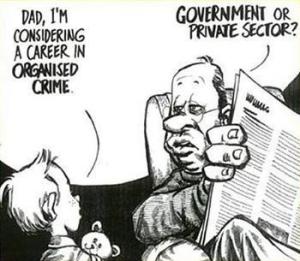
Obamacare Roots cartoonI haven’t spent a great deal of time analyzing the details of the American Health Care Act [AHCA] passed by the House of Representatives on May 4. The reason? It is quite unlikely that this version of a healthcare reform plan [aka Repeal and Replace the ACA/”Obamacare”] will make it through the Senate, so I don’t want to spend a lot of time analyzing it until I see what “it” ends up being [i.e., until a compromised version can get passed by both Houses and sent to the President]. I should also point out that it’s probably safe to assume that Mr. Trump will sign into law whatever that compromised version turns out to be, because he will be actively involved in the Senate process and subsequently in the Conference Committee process [as he was in the House process], so House Speaker Ryan and Senate Majority Leader McConnell will know clearly where he stands on the bill throughout those processes. It’s difficult for me to imagine anything that would be more devastating to the Republican party than for the Republican president to veto a bill they managed to squeak through both the House and the Senate [or to allow the time limit to expire and let it become law without his signature].

I said in my 4/25/17 post that the not-yet-produced House-Senate compromise version I am now referring to again will ultimately fail, and I outlined the reasons I believe that is the case [see that post here: Repealing And Replacing The ACA – A Realistic View]. In a nutshell, those reasons boil down to failure so far for our leaders to recognize that success in this endeavor will require that the starting point be determining first what guiding principles can be agreed upon up front before hashing out of the details even begins [for more depth on this, see the full Some Basics First section near the beginning of my 12/13/16 post at this link: A Realistic View Of The ACA – Part 2].

First Things First

In predicting how this will all play out, all one needs to know are these facts [none of which have anything to do with logic about either what is the best way to maximize access to healthcare for more Americans or to strike the best balance between the cost and the quality of care]:

  • [1] As depicted very well in the cartoon graphic I chose as the image for this post, some level of healthcare coverage is now viewed as an entitlement. In creating that mindset in a critical mass of the population, the ACA has been a booming success. That alone means that the evolution of any future healthcare delivery and financing system in America will be a political process, not a logical one — i.e., Republicans saying they are being realistic, and Democrats accusing them of taking healthcare coverage away from people [the entitlement angle].
  • [2] It will therefore be politics, not honest focus on designing the best healthcare delivery and financing system, that drives the thinking of practically every Legislator during these deliberations. In the end, it may be politics that drives Mr. Trump’s thinking, too, but there is at least a glimmer of a possibility that his nonconformity to tradition will prevail and at least some logic will creep in [I honestly believe he wants what’s best for America].

The reason I’m saying “politics will rule” is simple. … The number of Americans who one popular radio talkshow host calls “low information voters” is several times the average margin of victory in most elections, These are the voters who can most easily be swayed by smear advertising, so whichever party has the most “ammunition” for their smear ads [or is most skillful in using that kind of information, or both] will fare the best in the 2018 and 2020 elections.

  • [3] Anything that contains even a hint of characterization as “repeal/replace the ACA” will receive zero Democrat votes. If characterization terminology is more along the lines of “improve the ACA”, some Democrats may vote for it, but that may not matter if gaining their support causes loss of offsetting Republican support [e.g., due to inclusion of Planned Parenthood funding, more liberal language about religious freedom, etc.].
  • [4] Regardless of the final form the new law takes [assuming “punt” is not the ultimate outcome], both parties will immediately begin factoring their spin into campaign ads and “video/sound/print bites” in the media — Democrats saying Republicans are yanking good policies from the hands of poor people and shoveling the savings into the pockets of rich people, trampling on “women’s health”, picking on black people, etc.; Republicans claiming they’ve saved America from the Obamacare disaster and put healthcare back into the hands of patients and doctors, protected religious freedom, etc.

So, Going On Record — I Predict …

So regardless of the yet-to-be-worked-out details, I think I already have the information I need to go ahead and lay out all the possible paths that lie ahead:

  1. The Senate fails to reach enough consensus [even among Republicans] on a healthcare bill, so the entire effort essentially dies.
  2. [A toss-up with #3 as most likely] The Senate passes a bill that differs so substantially from the House bill that a conference committee process reaches an impasse, so the entire effort essentially dies.
  3. [A toss-up with #2 as most likely] The Senate passes a bill that differs considerably from the House bill, but a compromise is reached in the Conference Committee and the resulting bill is approved by both the House and the Senate, and it is signed into law by the President [or allowed to become law without his signature].
  4. [Highly unlikely] The Senate passes an essentially equivalent bill with minor adjustments that are easily negotiated into a compromise bill that is approved by both the House and the Senate, and it is signed into law by the President [or allowed to become law without his signature].
  5. [Extremely unlikely] The Senate approves the House bill as is, and it is signed into law by the President [or allowed to become law without his signature].

If the path that unfolds from here is #1 or #2 [what I referred to above as a “punt”], that will be most interesting to watch — because the ACA will continue to collapse under its own weight, and it’s almost impossible to predict who’ll be blamed for the resulting mess [the Democrats for passing it in the first place, or the Republications for failing to make the necessary “adjustments” to make it absolutely perfect]. I’d bet on the Democrats winning that battle of words for two reasons: 1) they are better at that game than the Republicans; and 2) the overwhelmingly liberally-biased media will always side with them [which yields the equivalent of hundreds of millions of dollars in free air time].

If the path that unfolds from here is #3, #4 or #5, I’m betting that the bill will be something President Trump will sign because he will have been actively involved in the Senate process and subsequently in the Conference Committee process [as he was in the House process], so Republican leadership will know clearly where he stands on the bill throughout those processes — and if they know he’s not with them, that will mean the same thing as knowing that you don’t have the legislative votes to pass it, so there won’t be any option but to “punt” and see if the pieces can be picked up next year or later [and whether or not there will be enough “pieces” to keep them from losing their majorities in the Senate and/or the House in 2018 will depend on how much more visible the ACA’s failure becomes between now and then].

In Closing …

If a path other than one of these begins to develop [very unlikely, I believe], I will take that development into account in future posts on this subject. Whenever one of these paths seems to be clearly developing as the frontrunner, I will spend more time “in the weeds” of that one and offer my thoughts on the future of Healthcare in America under that scenario.

Site Note. I have added an icon at the Repealing And Replacing The ACA page at this site entitled Resources: Content Related To This Page. Clicking on that icon will take you to an index list of links. Clicking on any of those links will take you to the associated item. The first entry in the index is an AHCA Summary that was passed by the House of Representatives on May 4, 2017.

Thanks!

img_7026 Charles M Jones

Charles M. Jones

A Perspective On The Huge “First 100 Days” Focus

The huge focus of the media — both liberal and conservative — on President Trump’s accomplishments in his “first 100 days” in office is yet another clear confirmation of what I’ve been saying for several years now, particularly since I set up this web site last year and started posting to its Blog section. What prompts me to say this? …

“Outside The Box” Thinking

Almost nobody in the media seems to be “thinking outside the box” in covering what is going on in our government these days.  News anchors, as well as the “expert panels” they have on their nightly broadcasts, are simply looking at historical information and comparing conclusions drawn from that information to what is going on now, and making their assessments accordingly.  This approach completely ignores the fact that we are in a completely different environment than any that has existed certainly in my lifetime, possibly since this country’s founding.

Let me use a simple parallel to describe what I’m saying.  Let’s look at Podunk, a town of 10,000 people in a largely rural area somewhere, one of six similar-sized towns about 20-25 miles apart, each within 25 miles of Metropolis, a city of 500,000 people. Acme Water Company, the water company serving Podunk, is projecting its future needs for expansion and upgrade of its infrastructure.  Analyzing historical usage trends, they project that in the next 10 years demand for the water they supply to Podunk will increase by 2-3% per year, and they outline their infrastructure projects accordingly [sizes of pipes, pumps, etc.]. Two years later, the town is in an uproar because water usage has doubled and very unpleasant restrictions on water usage have been necessary to balance supply and demand until massive “emergency” infrastructure upgrades can be made by Acme. … In making its ten-year projections two years earlier, Acme had failed to take into account several significant facts that made linear projection based on Podunk’s past data meaningless: 1) the population of Metropolis at that time was almost twice what it had been just three years earlier, and property prices were driving residential development to the surrounding smaller towns [but at that time, not to Podunk]; 2) four large manufacturing plants had recently been built in the two towns closest to Podunk, one having gone into production six months earlier and one scheduled to do so later that year. I won’t go into more here because I think my point [and hopefully the parallel connection] has been made.

The Seven Most Dangerous Words …

I shall never forget the words a Partner of a major “big eight” consulting firm made in a presentation to the Board and Executive Team [of which I was a part] over twenty years ago: “The seven most dangerous words within an organization are ‘We’ve never done it that way before’ “. Let me introduce here my corollary to that statement: “Seven additional dangerous words within an organization are ‘But we’ve always done it this way’ “.

The media today is failing to recognize either of these warning signs. They’re doing exactly what Acme Water Company did in my allegorical parallel above. … Looking at past presidencies, matching First 100 Days “success” with years-later evaluations of overall “success” after their one or two terms — using parameters like “major” legislation passed, Executive Orders issued, etc. Then, they’re comparing their resulting conclusions with Trump’s “success” or lack thereof in his First 100 Days and projecting what they think that means in terms of how his presidency will ultimately be assessed vis-à-vis past presidencies. There’s a total failure to recognize that they are comparing apples to oranges.

One Thing On Which Everybody Seems To Agree …

For all his faults, there’s one thing about President Trump on which I think almost everybody, whether they like him or hate him, agrees: he doesn’t fit any of the “molds” that characterize past presidents. Just as two recent examples of how he just thinks differently — like a businessman, not a politician: “The price tag for the new Air Force 1 is ludicrous” [result: it has been negotiated significantly downward]; “Let’s use American steel in the Keystone and Dakota pipelines” [result: limited because of contracts already in place, but the idea would probably never have even occurred to a politician].

This “doesn’t fit past molds” observation alone should put the media in “outside the box” thinking mode. The message to the anchors and “expert panels”? … Quit trying to force this square peg into the nice round holes you’ve bored into which you put daily “happenings”. Instead, consider the cumulative post-2016 “pile” of “happenings” as pieces of a puzzle which, when grouped into categories — some of which will be entirely new categories — and placed onto the board, can begin to reveal the image of the New Paradigm. As you do that, you will see every day a bigger and bigger percentage of the mosaic depicting the New Paradigm. That, in turn, will enable you to report information that actually interests people, rather than continuing to develop content that feeds your own perceptions of reality [which are clearly in the Old Paradigm]!

For starters, how about this? … Pull from your databases two lists: 1) everything DJT said in the campaign he’d do in his First 100 Days and “score it”; and 2) everything HRC said in the campaign she’d do in her First 100 Days and try to objectively “score it” [i.e., try to realistically view how much from that list she might have actually gotten done within that 100 days with Republican majorities in both the House and the Senate].  Also, try to paint a picture of what our overall status would be now had she won last November and had that projected First 100 Days “score”, and compare that to what our overall status is now [“overall status” meaning the economy, international perceptions, national security, etc.]. I for one would find any truly objectively-produced content like that very interesting.

img_7026 Charles M Jones

Charles M. Jones

Repealing & Replacing The ACA – A Realistic View

It is mind-boggling to me how already-complicated systems and processes become even more complicated — by orders of magnitude — when government gets involved. The “repeal and replace Obamacare” mantra used to describe the process that is needed to keep “Obamacare”  [the Affordable Care Act, or ACA] from collapsing under its own weight [which it certainly will in its current form] is a classic example.

In December 2016, I posted a four-part series to this blog entitled A Realistic View Of The ACA. In Part 1 of that series [Part 1], I introduced the series and covered the first part, Repeal.  In Part 2 [Part 2], Transition, I focused on a relatively simple transition plan for people currently covered under the ACA, including some of the financial math that would be associated with such a plan. In Part 3 [Part 3], Replace, I focused on essential elements that would need to be included in a system to permanently replace the ACA.  In Part 4 [Part 4], Looking Forward, I got into 1) how repeal and replacement of the ACA could potentially be the main determinant of the outcome of the 2018 mid-term elections and/or the 2020 presidential election, and 2) what the future will probably look like under the replacement law if it is successful.

In this post, I’ll get into what has transpired so far, what seems to be underway this week, and how all of that validates my point as expressed above — government seems to have a knack for making complicated things much more complicated.

Recent And Current “Goings On”

Repeal/Replace “Plan A” was pulled from consideration on March 24 when it became clear that not even enough Republicans supported it to overcome a 100%-certain Democrat bloc vote against it. Why? Simple politics. The Republican leadership and Secretary of HHS Price created it in a vacuum, making two stupid assumptions: 1) that any plan they developed would have the support of all moderate or “mainstream” Republicans; and 2) that they had the “muscle” to overcome resistance they surely must have known would come from Freedom Caucus Republicans.  As they tried to “tune” the bill to satisfy both factions within their own party, they got into a quagmire — adding or taking away items that would have brought in more Freedom Caucus support caused them to lose support among moderates, and vice versa.  Had the leadership not made those two assumptions, there is not a doubt in my mind that something would have passed in March [that doesn’t mean it would have been good — it just means that Republicans would have been able to say they kept their repeal/replace promise and could now move on to tax reform, immigration reform, etc.].

“Plan B” [in its current form], announced on April 20 as being very near completion and having the support needed to pass the House, will “evolve” into what will no doubt be a Senate/House-compromise version of it. If that version gets passed by both houses and signed into law by the President, I predict that the resulting healthcare system will ultimately fail just as the ACA is failing, for one simple reason — the same reason that is one of the roots of the ACA’s failure [the “tap root” of the ACA’s failure, though, was a fundamental design that was financially unsustainable]. That reason is that nobody in the legislature is starting from the philosophical base I suggested in Part 2 of the above-referenced series [and still strongly believe] must be the starting point — determining first what guiding principles can be agreed upon up front before hashing out of the details even begins [see the full Some Basics First section near the beginning of that post at this link: Part 2].

Déjà vu?

Without getting into more detail here than I feel is appropriate in the space I allocate to these posts, I can offer a simple explanation of why comprehensive laws like the ACA and whatever it is replaced with, absent up-front agreement on guiding principles before negotiations over details even begin, ultimately either fail or force us into watering them down so we an afford them — i.e., this axiom: over time, politicians will find ways to get rid of the unpleasant parts of a law [generally, those parts that their constituents don’t like and/or cost their constituents more money] and add more benefits [“goodies” that their constituents want]. All you have to do is look at the history of Social Security and Medicare to see plain demonstrations of that simple fact.

This axiom is already manifesting itself in the current repeal/replace effort. The ACA requirement that insurers must allow children to maintain their coverage on their parents’ policies through age 26 [a “goodie”] is extremely popular, and appears to be among features that will surely make it into whatever version of the repeal/replace bill gets passed into law. While I’d be the last person to argue against the desirability of that feature or even its merits, the truth is that it is “on the table” for the wrong reason [many people like it].

In fact, operation of this axiom is exactly why the ACA is collapsing under its own weight. Poorly designed as it was, it did have some elements that at least in concept, theoretically might have worked, but several of those elements were very unpopular and were “tuned out” over the past few years [with bipartisan support, I might add].

New Healthcare Page At www.USAparadigm.com; Other Changes Coming

Simultaneously with this blog post, I am inserting a new page at this web site.  The purpose of that page is to outline what I honestly believe must be the framework of a new healthcare system to replace the ACA. Initially, it is the main content of Part 3 [Replace] of the four-part post mentioned above, with some additions and modifications I’ve made since that post.  If future developments suggest a need for additional changes to that page over time, I’ll make those changes and announce them in one of my Blog posts. This new page can be accessed through the new regular menu at this site, but this link will take you directly to it: Repealing And Replacing The ACA.

The static pages of this site were originally designed to focus visitors’ attention on the 2016 election that was still a few months away when the site was first launched, and Blog posts up to Election Day [11/8/16] were in that same vein. To transform the site’s original static page structure into one that reflects the new post-election environment [which I am certain is continuing confirmation that a New Paradigm is rapidly solidifying itself] and set the stage for content focused on the future, the following changes to the menu structure are being published simultaneously with this Blog post, just over three months into the new administration that began 1/20/17:

    • The list of original pages in the sidebar menu, originally entitled WHAT THE HECK IS GOING ON?, was renamed to BACKDROP – SITE CONTENT LEADING UP TO 11/8/16 ELECTION.
    • A new menu section entitled NEW PARADIGM “GOINGS ON” was added just above this renamed section.  The first “installment” in that section is the above-mentioned page entitled Repeal And Replace The ACA. As new static pages are published, links to them will appear in this section, and they will be announced in concomitant Blog posts.

By the way, I mentioned in Part 1 of the above-referenced series why I believe my educational and experiential background have given me some unique qualifications to write on this subject. I’ve included that paragraph in the footnote below*.

Thanks!

img_7026 Charles M Jones

Charles M. Jones

* My Qualifications For Writing On This Subject

You can review my background in depth at the https://usaparadigm.com/who-i-am/ page at this site.  I’ve summarized here the content on that page that is most significant vis-a-vis my blog posts on this subject. … I was a “C-Suite” Healthcare executive for most of three decades, and after that I was a Healthcare consultant for about seven years. Among my executive oversight responsibilities for several of the “C-Suite” years was a centralized business office for a ten-hospital, seventy-clinic integrated healthcare delivery system that also included an insurance subsidiary. I say that to say that I have direct knowledge and experience that I believe enable me to write with at least some degree of authority on this subject.