 Note. … After purposely consuming a bit more than my usual amount of media coverage over the past 36 hours or so since the election outcome was known, I decided to take a different approach in this seven-day “Election Aftermath” series than I outlined in yesterday’s first post of the series. Although I will probably incorporate into remaining posts some results of the “number-crunching” I mentioned in that first post, the overall purpose of this series will now be to assess and comment on the unfolding post-election climate.
In a way, I guess it’s encouraging to me that the only negative I got from the victory and concession speeches of 11/9/16 was the “glass ceiling” reference Hillary Clinton made in her concession speech. I call that a negative because the outcome of this election had absolutely nothing to do with the fact that the defeated candidate was a woman, but everything to do with the fact that she is a “standard politician”. Running against a person like Trump, she [or he] would have been defeated whether she/he was a woman, an African American, a Latina/Latino, an Asian American, or whatever. By the same token, had the Republican candidate been a “standard politician”, too [which would have been the case if one of at least 14 of the other 16 initial contestants had won the nomination], a Clinton win might have been more likely. Although ideological drivers were clearly at work, too, this election was mostly about fixing Washington. People are simply fed up with the current dysfunctional government in this country. They want something that will work, and things like which major party our leaders are in, or what their race or their sex is, simply don’t matter any more.
So what else about the post-election climate stands out so far? Without hesitation, I can say it’s all the demonstrations going on. Democrats [and of course, the media] were the ones that pounced on Trump’s hesitation to say up front that he would accept the election outcome. In that debate, Clinton quickly gave the “standard politician” response: “Yes”. For the rest of the campaign, she touted that “peaceful transition of power” was a “hallmark of our democracy”, and that Trump’s refusal to say he would accept the outcome “no matter what” was deplorable.
Fast forward to now. Demonstrations that cause traffic blockages, “keying” cars, breaking store windows, starting fires … the very people whose leaders [yes, both Obama and Clinton!] have graciously expressed their own support for an orderly transition are doing exactly what those same leaders have denounced and called deplorable. In fact, what they are doing is much worse — damaging property, and putting lives in danger. The vitriol and the hateful remarks are at least as bad if not worse than anything Trump has said, even including his disgusting remarks in the now-infamous 2005 video released by NBC. It appears to me that if these people are a valid sample of Clinton’s supporters, she was referring to the wrong people when she called Trump’s supporters a “basket of deplorables”.
In order to make one last important point in this post, let me mention one other remark Trump made that many people considered inappropriate and was picked up and amplified in the media and in the campaign … Lately, he has referred to the election process as being “rigged”. I believe his opponent, and the media, failed to grasp the scope of what he meant. Everybody denouncing that remark referred to dead people voting, multiple votes being cast by the same person, etc. — i.e., actual fraudulent activity — and gave the “standard politician” response that there is no hard evidence that any of this is actually going on.
Back to the “issue” of Trump’s refusal to say up front that he would accept the outcome of the election, and relating it to his “the system is rigged” remarks, what everybody who pounced on him about both of these “issues” failed to take into account was that Trump might have had a broader-scope view of them than any of them had. I believe the scope of his “rigged” remark extended to how the Electoral College system works [not whether or not it’s a valid system — just how both parties have learned to manipulate it], the presence of Super Delegates in the Democrat Party nomination process [and outwardly different but conceptually similar components of the Republican Party nomination process], and how liberally biased the media is [which results in grossly disproportionate “free air time” that supports the liberal candidate].
In the same way, his refusal to just answer up front with a simple “Yes” to the question “Will you say now that you will accept the outcome of the election?” was less about selfishness and narcissism than it was about a shrewd businessmen simply giving an answer that harmed nobody and wouldn’t affect his electability — and doing so after calculating very quickly in his mind potential conditions under which that could come back to haunt him [like the 2000 “hanging chad” issue, particularly if there was solid evidence of fraudulent activity].
The truth is that what won Donald Trump the presidency was not just his own brilliance, but his ability to surround himself with people who could find out what it would take in this election to win, put together a plan [i.e., a campaign strategy] that would capitalize on that knowledge, and effectively and efficiently implement that plan — and his part was to continuously assess how it was going and make personnel or other adjustments as necessary to drive the process to a successful outcome. As just one example of why that outcome was successful, the “Blue Wall” was toppled by Trump’s wins in midwestern and other states the Clinton campaign literally quit campaigning in because they viewed them as being behind the “Blue Wall”.
Barack Obama is a brilliant man, but he has been one of the worst if not the worst President in my lifetime. Donald Trump is a brilliant man. Whether he will be an even worse President, a good President, or a great President remains to be seen. On this, I can truly say “I’m with her” [to use a phrase from the Clinton campaign, coined by Elizabeth Warren, I think]: “We must accept this result and then look to the future. Donald Trump is going to be our president. We owe him an open mind and a chance to lead. Our constitutional democracy enshrines the peaceful transfer of power. And we don’t just respect that, we cherish it”.
Stay tuned. We’re in uncharted territory, and until some trends and patterns begin to take shape between now and 1/20/17 [inauguration of Donald Trump as POTUS], there is literally no reliable basis on which to predict what each post-election day/week/month will look like.
Thanks!

Charles M. Jones


 I thought it was one of Yogi Berra’s famous quotes, but after research I realized it was apparently somebody else [and I got tired of trying to trace it down], but this comes to mind as I write this Election Day post: “When you get to where you’re going, well there you are”. Here we are, Election Day 2016. So where have we been going to this point, and where are we today? More importantly, where are we going from here?


 This edition of my Down The Stretch series of posts will be very brief. The thought occurred to me that a simple table might be the best way to communicate something that has been an underlying theme at this web site and in the posts to this blog … On November 8, everybody who is registered to vote [including those who do not vote] will be voting for either the Republican Platform or the Democrat Platform [see previous posts for links to these platform documents, and to a table comparing them], whether consciously making that decision based on their worldview and value system or unwittingly because they don’t understand how the

















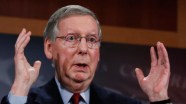




 As I’ve re
 ad and heard statements by two Tennessee Republican U. S. Representatives [Marsha Blackburn and Diane Black, both of whom are women, I should emphasize, and one of whom was a victim of physical assault by men as a young adult], neither of them is dis’ing herself totally from Trump. Both of these women seem to me to be principled people with sound value systems.

 www.USAparadigm.com