Blog

Current Paradigm Now Officially Old Paradigm

A sportscaster once asked former NHL superstar Wayne Gretzky how it was that he always seemed to be right where the action was in Hockey games [nicknamed The Great One, Gretzky has been called the greatest hockey player ever by many sportswriters, players, and the league itself]. His answer was “I just figure out where the puck’s going to be next, and skate there”. I’ve often reflected on that dialog, because in that simple exchange, Gretzky revealed what it takes to be a successful CIO. I’d have to leave the decision as to whether or not I was a successful CIO to people with whom I interacted during my years in that capacity: employees, executive team counterparts in other areas of corporate responsibility, vendor principals, associates in national and state organizations on whose Boards I served [and in some cases chaired], etc. I guess I can at least assume I wasn’t a total failure, because I made a very good living in that role for several decades.

As a member of an organization’s senior executive team, a successful CIO has to visualize where the organization is headed from a business perspective, what IT environment would best support the organization’s success in that future business climate, and gain support [and funding] in the current business climate for projects that would move in the direction of that IT environment. Sounds simple, but it’s much easier said than done — particularly in situations where not only containing but actually reducing costs is a key need in the current business climate.

So how does all that relate to my posts to this Blog?

As I look at how things have unfolded since I started this web site and blog almost a year ago [about two months before the 2016 presidential election], it’s not difficult for me to assess where we are now vis-a-vis where we would be had Hillary Clinton been elected President — better off by orders of magnitude: for many reasons in my opinion, but even if there were no other reasons, because a) we have a Supreme Court that has about the same liberal/conservative balance it had prior to the death in 2016 of Justice Scalia [with Clinton in the White House, it would be much more liberal-leaning now because she would have filled a conservative vacancy with a liberal, rather than the conservative/conservative replacement I believe Justice Gorsuch’s appointment will turn out to be], and b) we have a practical and pragmatic thinker in the White House instead of a standard, business-as-usual, don’t-rock-the-boat politician.

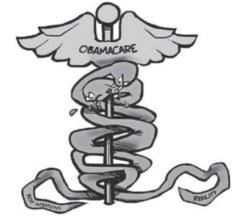
However, the inability of Republicans to clearly articulate and move forward with an agenda, coupled with the Democrats’ unrelenting battle against President Trump [“the Russians are coming”, or whatever] and the largely liberal media’s wholehearted support of that battle, has produced a new level of gridlock in Washington. This week’s apparent [at this writing, at least] final collapse of the Repeal/Replace the ACA component of the Trump administration agenda is absolute confirmation of my assertion since the get-go on this site and in my blog posts that the Current Paradigm is dead. The only remaining variable in the Paradigm Shift Underway is what the attributes of the New Paradigm will be. By the way, I suppose it’s obvious by now, but perhaps I should point out that my choice of images to include in this post stemmed from my strong feeling that I am correct in this assessment of our current political system.

In future posts, I will, from that overall perspective, offer my views on 1) what New Paradigm attributes I see developing and what additional attributes I think are most likely to develop, and 2) how development of these attributes relates to the here and now [e.g., what is likely to happen on the Trump administration agenda front, how all this might play out in the 2018, 2020, 2022 and 2024 elections, etc.].

So Here’s The Deal …

So here’s the deal. … I’ve decided to rise above all the details with which the media is currently consumed and do what nobody in the media seems to be doing — look at all this “noise” [where the action is and what is going on now], figure out possible scenarios that may develop from here [figure out where the puck’s going to be next], describe potential environments current and anticipated directions may create [skate there], and outline what our lives would be like in those environments [be ready to play the game “where the action will be”]. Only what I’m sure will be masses of historians who will one day look back on my writings and critique them will be able to document whether I was Gretzky-class in my assessments and predictions. 😊

Thanks!

img_7026 Charles M Jones

Charles M. Jones

Advice To America’s Leaders

Strom Thurmond – Filibuster Record Holder

Since I’m sure my blog posts have caught the attention of our national leaders and made them aware of my vast knowledge of the issues we face as a nation, I’ve decided to go ahead now and share the advice I know they must be hungering for so desperately, to wit …

Senate Majority Leader Mitch McConnell

Official PortraitGet rid of the filibuster already! You’ll catch a lot of flack initially, but the blistering speed with which you will be able to get great things done will ultimately be what you, Speaker Ryan, others in party leadership, and President Trump and his administration will be remembered for decades from now. A decade from now, nobody is going to remember whether you were faithful to a politician-promulgated rule that has long since outlived its usefulness. All people will remember is what got done, and nobody will care if it was with 51 votes in the Senate or 60. The people have given Republicans everything they need to produce what they were elected to do — so do it! [See Out With The Filibuster! for more depth into my rationale here, and why the argument that eliminating the filibuster is something Republicans might regret in the future isn’t valid in this century].

Speaker of the House Paul Ryan

114_rp_wi_1_ryan_paulEncourage Senator McConnell to get rid of the filibuster in the Senate, and then work with him and President Trump to clarify and solidify a more specific agenda — and get on with it! In terms of personal knowledge of the issues we face, particularly financial ruin if we don’t get ourselves onto a more stable fiscal path, I believe you are one of the sharpest knives in the Legislative drawer. Your ability to lead effectively, however, is yet to be determined. You could take great strides in demonstrating your leadership ability by leveraging Senator McConnell’s political “savvy”, and listening more receptively to ideas of other “sharp knives in the drawer” [in both the House and the Senate — e.g., Senators Paul and Cruz, and Congressmen Meadows and Jordan just as a few examples]

Senate Minority Leader Chuck Schumers000148

Come to grips with the simple fact that the ACA [Obamacare] in its current form is failing, and is literally collapsing at an accelerating pace. When that happens, the same number of people [or even more] that you keep saying will lose their coverage under the Republican replacement plan will do so anyway. If you’re as concerned about “the people” as you say you are, getting a workable healthcare system in place would be your goal, and working with Republicans — even with the President that you despise so much — would make a lot of sense. Democrats carefully [and wisely] avoided touting the ACA in the 2016 campaign because it was an albatross and Republicans were campaigning successfully on repeal and replace. They won and you lost. Get over it, and start focusing on what’s best for America instead of trying so hard to avoid “repeal” terminology!  And then, who knows? That could broaden your horizons of thought on other issues that our leadership needs to address — immigration, true tax reform, long-term fiscal stability, etc.

House Minority Leader Nancy Pelosi114_rp_ca_12_pelosi_nancy

Ditto the above advice to Senator Schumer, plus this. … Step down as Minority Leader! In your early years in that role you did quite well, but even some of your own party members see that it’s time for new leadership and are reluctant to express openly any evidence of their support for you going forward. Your apparent determination to double down and prove your detractors wrong is kind of like a Confederate soldier’s descendant saying “Save your Confederate money, boys; the South shall rise again!”. It’s time to do what is best for your party. Step down as Minority Leader — heck, just resign from the House and go enjoy the California beaches. And, if the lush rest-of-life retirement stipend and Rolls-Royce-level health insurance your championing of the “middle class” has earned you are not sufficient to support whatever lifestyle you want, you can take tiny little dips into your top 0.1% [as Bernie Sanders would say] $200 million net worth to fill in the gaps! [Yes, I did the math: even if you earned as little as 4% on your investments and lived to be 100, you could spend about a million dollars per month and still leave each of your five children $20 million — leaving each of them still in Bernie’s “top 0.1%”]

And Of Course, President Trumpdonald-trump2.jpg

Don’t quit tweeting— just be smarter about your tweets and quit shooting yourself in the foot with them. The concept of a President of the United States using Social Media [Twitter and FaceBook, particularly] to communicate directly with the American people is a good thing, and could be thought of as a modern-day, technology-facilitated version of FDR’s “fireside chats”. Using that medium does accomplish what I believe is your goal in using it — to communicate your thoughts on various issues directly to our citizenry, unfiltered by the speculations, embellishments and interpretations of so-called “journalists”. A modicum of “filtering” and editing, though, by advisors you trust implicitly, would serve the double purpose of achieving that goal and avoiding embarrassing missteps.

Well, there you have it. Follow this advice and everything will work out just fine. This advice has been provided as a public service, with no expectation of remuneration. My reward will be the satisfaction of seeing my country get off the current path toward fiscal insolvency and moral decline and onto a path that is fiscally sustainable and [hopefully] morally more consistent with the worldview of our founders.

Thanks.

img_7026 Charles M Jones

Charles M. Jones

Independence Day Thoughts – July 4, 2017

4th_of_july_2On this day when we celebrate the 241st anniversary of the adoption of our Declaration of Independence, I am experiencing two sets of emotions that are producing a degree of tension in me that I find troubling.

What I believe is the main source of this tension was expressed very well in an interesting opinion article in this morning’s [Nashville] Tennessean. The author was Tom Purcell, a Pittsburgh Tribune-Review humor columnist who is nationally syndicated, and the title was Bring Back Common Sense For July 4. I will close this post with a short paragraph composed of excerpts from that article — because its basic theme, in my opinion, “hits the nail on the head” as to what we need most in this country on this Independence Day.

The Declaration’s Place In Our History

[Don’t forget that you saw it here — what may be the most concise history ever written of the formal founding of our nation!] Our nation was actually still “in labor” when the Declaration Independence was adopted. Interestingly [and perhaps surprisingly to the millions of people in America who don’t know and probably don’t care], it was not “born” until the Constitution was officially ratified as our governing law just two weeks shy of twelve years after the Declaration of Independence was adopted. During that twelve years, ten Amendments were added to the original document — Amendments that were necessary to get the required number of states to ratify the Constitution as our governing law. Those ten Amendments came to be known as the Bill of Rights, and they constitute 37% of all Amendments to the Constitution since it [with those Amendments] was ratified on June 20, 1789. The “baby” was “born” at that point, but it took another 7-1/2 months for it to become a fully operational government [all three branches “up and running”] on February 2, 1790.

Why is this important, and what does it have to do with the conflicting emotions I’m experiencing 227 years later? …

The Emotions?

Thankfulness

I am thankful that through the providence of God I was born in the United States of America. I have been to 49 of our 50 states [for some reason, my paths have never been through Idaho], and to every continent on this planet except Antarctica and Australia, and despite all that’s wrong with our country at this point in its history, I am certain that there is no other country on earth where I would prefer to be a citizen.

Concern

My overall concern cannot be summarized in a sentence or short paragraph. It was why I set up this web site and began posting to its Blog section. A visit to the Home page [Home Page], and to pages within the menu selections there, is the best advice I can give to anyone wishing to explore or re-explore my overall concern.  However, the one thing that concerns me most on this particular day of remembrance of our founding is the general “atmosphere” that prevails today — in the regular processes by which our government operates, in media coverage of those processes and of our elected and appointed leaders, and in how various ‘factions” of our citizenry express their opinions on issues and their views of other “factions” adhering to different opinions.

The Tension

The tension these conflicting emotions have generated in me is not just nostalgia, not just wishing we were like we were “back in the day …”. I know as well as anybody that you can’t expect circumstances to remain constant over 241 years of gargantuan changes in practically every facet of life — my career spanned over 40 of those years, and the bulk of my work life was in an occupation that was one of the most, if not the most, influential drivers of those changes [information and communication technology]. The tension stems from the atmosphere itself. The level of distrust — within our leadership, between our citizens and our leadership, and among the many “factions” within our citizenry — is worse than at any time in my personal memory. And perhaps even worse, the amount of disrespect, hatred and vitriol that is evident in how people are expressing themselves is astonishing. So the tension is the realization that this cannot continue as “the new normal”. Something’s got to give.

On this particular occurrence of this particular holiday, we would be wise to realize that the whole reason the “birthing” process that formalized our founding took over a decade was that people had strong feelings on certain issues that were very important to them — and no doubt they expressed those feelings in some heated arguments. In the end, though, they came to consensus, and our nation was born. I expect that they came to consensus because they were a bit more civil in their dealings with one another, and that they spent more time trying to reach that consensus than they did trying to demonized each other. Call me an optimist, but I’d like to think that we still have the capacity to get back to that point.

In Closing …

I’d like to close this post with the following short paragraph composed of excerpts from the article I mentioned in my opening remarks. …

“In the course of human events it is necessary, now and again, to renew our commitment to the principles and practices that made our country great in the first place.  Our country has always held to what the Declaration of Independence says about certain ‘Truths’: they are ‘self-evident, that all [people] are created equal, that they are endowed by their Creator with certain unalienable Rights, that among these are Life, Liberty, and the pursuit of Happiness’.  Regrettably, we forget these simple truths sometimes.  To renew our passion for the free and equal pursuit of life, liberty and happiness, we need a new declaration that promotes civility, open conversation and common sense.  When someone disagrees with a political position we hold, it does not make that individual a monster or something subhuman. It does nobody any good to demonize or ridicule this person — not in a country founded on freedom of speech. To renew our gratitude for the incredible freedoms we enjoy — freedoms that do not exist in many other parts of the world — is it not better to engage your political opponents in civil conversation and debate rather than to prevent them from speaking at all? Groupthink and political correctness are killing debate in our country.  … How did we arrive at a state of affairs in this country in which a person who criticizes [another’s position on an issue] is smeared as someone who hates [certain segments of our population]? … In a country as free and robust as ours, we certainly can work out our differences and find common ground. To do so, we must restore civility in our public debate, dial down the violent rhetoric and listen to others who think differently than we do.  As other parts of the world work to emulate America’s devotion to free thought and speech — as others across the globe work to embrace the ‘unalienable Rights’ to ‘Life, Liberty, and the pursuit of Happiness’ — can we please get back to leading the way? [It’s the Fourth of July]. I can think of no better time to embrace a new declaration that promotes civility, open conversation and common sense.”

Happy Independence Day!

Thanks.

img_7026 Charles M Jones

Charles M. Jones

John Lydgate’s Wisdom Vis-A-Vis The AHCA

Most people probably have no idea who John Lydgate was, but most people probably have heard one of his famous quotes: “You can please some of the people all of the time, and you can please all of the people some of the time, but you can’t please all of the people all of the time” [Lydgate was a monk and poet in Bury, England (just North of Manchester) in the late 1300s and early 1400s].

I titled this post John Lydgate’s Wisdom Vis-A-Vis The AHCA because the above-mentioned quote of his is exactly why any law the GOP may be able to squeeze through under the Reconciliation procedure [required because there will be zero support from the 48 Democrats in the Senate] will ultimately fail just as the ACA [which was passed under Reconciliation with zero support from Republicans] is failing now. Whatever form it takes, there will be some “groups” of people who will not be pleased with it — people benefitting from expanded entitlements [Medicaid], people with pre-existing conditions who perceive [whether accurately or not] that their coverage is “less” than it “would have been” under the ACA, etc. The heavily-biased media will only need one case in each of these “groups” to plaster on every newspaper and TV screen images of doom “brought about by this terrible, mean-spirited law”, as practically all Democrats are calling it. Few if any media outlets will ever mention that comparing any new law — even one passed with bipartisan support — to “how things would have been under the ACA” is a meaningless exercise because the ACA in its current form is collapsing at a rapidly-accelerating pace, and it will continue to do so until all legislators in both parties are forced to work together to do something to fix the resulting disaster.

Mainly [but not solely] for this reason, I honestly believe that, from a long-term perspective, the best thing the GOP could do now is to simply back away and let the ACA finish collapsing. Let the Senate squabble a little more, and then schedule an Oval Office Message to the American People on Healthcare in which President Trump, with Senate Majority Leader Mitch McConnell and House Speaker Paul Ryan standing on either side of him [looking concerned, but frequently nodding approvingly], delivers a speech something like the following:

donald-trump-oval-office.jpg“My fellow Americans … As you know, a major promise I made to you throughout my campaign was to repeal and replace the Affordable Care Act — also known as “Obamacare” — which has been rapidly failing for the past several years and is now collapsing at an accelerating pace. Many of you also elected your current Senators and Representatives in large part because they made that same promise. I want to begin what I will say tonight with a simple truth: under the current procedural rules that govern the process by which proposed legislation makes its way through the Senate and the House and ultimately to my desk for signing into law, we cannot fulfill this promise at this time. That leaves us with no other choice but to move on to other important initiatives like tax reform, immigration reform, and developing a sustainable fiscal plan that will deal once for all with our mushrooming debt.

Removing Healthcare from our short- to intermediate-term focus will, unfortunately, allow the ACA, which was passed with no Republican support in 2009 and is still championed today by Democrats as a good plan, to continue in its downward spiral toward complete collapse. That will directly and adversely impact many of you who will continue to lose coverage and be left with few if any truly affordable options for replacing it.

The current two-party dominance in America, together with the extreme polarization that has developed for several decades along both ideological and fiscal lines, have resulted in the deadlock that we see now. The truth is that the filibuster, well-intentioned as it may originally have been, has become a mechanism that enables the minority party to block any legislative proposals it wants to block if they can achieve a monolithic, party-line mentality within their own party.  Democrats have clearly chosen this path for the foreseeable future. I fully realize that Republicans were accused of the same mentality when they were in the minority not many years ago, but at least they weren’t completely monolithic in their thinking and would sometimes supply “defectors” to join with Democrats and get at least some things done. In fact, the whole reason we were unable to pass the current proposal in the Senate is that just a few Republican Senators were unwilling to move from their positions of opposition [which in turn were understandable based on the feelings of their particular constituencies].

In retrospect, all of this may actually be for the better when we look at the situation from a long-term perspective. All Democrats refuse to discuss any bill that is characterized as repealing the ACA, and some Republicans refuse to discuss any bill that isn’t characterized as repealing the ACA — even though they all know that the ACA cannot survive without considerable modification that would be very close to “repeal and replace”.

When the ACA collapses beyond a certain point — a point that is difficult to accurately describe or predict, but which is much nearer than anybody in our leadership would hope — bipartisan development of a solution will become not only desired but necessary because the situation will be the very crisis we have been sounding alarms about for the entire eight years since the ACA became law. At that time, I can assure you that I will have no higher priority than to turn that crisis into an environment in which as many of you as possible will have the best healthcare possible within reasonable fiscal bounds. There isn’t a doubt in my mind that Senators and Representatives in both parties will be eager to work with me toward that end — Republicans because they will finally be able to achieve more of what their constituents elected them to do, and Democrats because they will then still own a system that has actually collapsed [i.e., they will no longer be able to argue that the ACA is not fundamentally flawed, and that trying to patch it with improvements is a better option than learning from its failure and developing a better plan that is not encumbered by elements retained from a failed system].

It is important to me that you know what a huge disappointment this is for me. I wanted very much to deliver on this promise very early in my administration. But it is what it is, and we have too many other priorities that have been waiting too long. As of tomorrow, we are moving on to those priorities.

I want to thank you for making me your President, and for providing what theoretically should have been a Legislative environment in which I could have moved forward quickly with the agenda I laid out in broad terms during my campaign — that environment being majorities in both the Senate and the House of Representatives. I look forward to getting back to Healthcare at an accelerated pace as soon as failure of the ACA reaches the point I’ve mentioned tonight that will make that possible.

Thank you for listening to this message that is directly from my heart. May God bless you, and may God bless the United States of America.”

It will be most interesting to see whether the Senate brings a bill to the floor [knowing it may not pass], and if so whether or not it passes.  In that situation, it will be even more interesting to see if a Senate-House compromise bill can be passed and sent to the President for signing. And in that situation, it will be even far more interesting to see if the President considers vetoing it [unheard of as it may sound, I honestly believe that is a possibility — see some of my earlier posts, and the related pages at this site].  Fasten your seat belts for the ride — it might be bumpy!

img_7026 Charles M Jones

Charles M. Jones

The Cycle of Life (in Politics)

Cycle of Life (In Politics).001

Look at “goings on” since the 11/8/16 election, and it’s easy to get a quick snapshot of what I would call “The Cycle of Life (in Politics)”. It really doesn’t matter which party’s actions you observe, but paying more attention to the losing party [Democrat in this case] is usually more revealing. So here it is …

The Cycle of Life (in Politics)

For a person not currently holding public office, there is a preliminary stage before he/she enters the cycle — Explore.  This is the stage in which people who have long-since decided that they will enter a race say “I’m considering it, but I haven’t decided. The support I’m getting is overwhelming and humbling, and I really appreciate it, but I … [need to really think this through, need to consider the impact on my family, blah, blah, blah]”. The outcome is announcement of his/her candidacy pretty soon after this initial warm and fuzzy stuff, surrounded by cheering banner-holders with camera angles carefully managed to make the crowd appear much larger than it is. The best approach seems to be “After careful consideration, … the future of my country [state, city … whatever] is too important for me to pass up this opportunity to serve, … blah, blah, blah.”

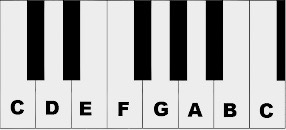
Once the candidaIMG_3327te is officially in the race, there are five stages in the cycle itself, with a sixth stage simply being the beginning of the next cycle — kind of like the seven-note musical scale, where an eighth note is the same as the first note, just one octave higher.  Whether the “higher” part applies to politics is a discussion for another day [I could argue that the correct parallel would be to compare to playing the musical scale downward, with the eighth note being an octave lower — as “things political” seem to be going lower and lower these days 😀]. I’ll cover the stages from the perspective of a Presidential election, but the basic principles apply to any election at any level of government. …

Campaign

For a person not currently holding public office, this stage begins immediately after the announcement, and at least a year before the election. In recent times, it’s more like a year and a half.  First, an “issue” needs to be invented if one doesn’t just drop into the candidate’s lap [the preexisting issue being something like a recently-declared shooting war or a 9/11-scale terrorist attack or a disease outbreak that killed at least tens if not scores of thousands of people]. Then it’s fundraising, hiring campaign staff, seeking endorsements, looking for opportunities to speak at gatherings of people, etc. If the backing of one of the two major parties is clear, the fundraising part becomes much easier, and if the party considers the race important enough, the candidate can almost just sit back and show up wherever they tell him/her to speak, and say whatever they tell him/her to say. Case in point: the 6/20/17 runoff race to replace Republican Tom Price [who vacated his House seat to become Secretary of Health and Human Services] in the district that includes the northern Atlanta suburbs — well over $50 million was spent on that one race for one seat in one district in America, and far and away the biggest percentage of that came from outside the state.

Anyway, the rest of this stage is pretty much what you see on TV.

Election

This is the fastest-moving part.  By this time, all the mud is slung in both directions and it is what it is. The candidate just gets his/her face on camera as much as possible, encourages people to vote, smiles a lot, etc. Usually by early evening that day, maybe late evening if it’s a close race, the outcome is known.  Acceptance and concession speeches are made, and the wheels of the remaining stages are already in motion [oftentimes even partially revealing themselves within the words and phrases of the acceptance and concession speeches].

Analysis

The parties of both the winning candidate and the losing candidate immediately get into analysis mode — what went right/wrong, who didn’t vote at all [or for our candidate] that we thought would do so [losing party], who voted [and for our candidate] that we thought wouldn’t [winning party], how do we explain and downplay the significance of the loss [losing party] or maximize “spin” from the win [winning party], etc.

Strategy

The analysis stage provides the seeds for a going-forward strategy.  Most recently, Democrats needed something to blame for the 11/8/16 loss besides an at-least-equally-flawed candidate [who was also a totally boring speaker who had no central campaign theme] and a campaign strategy that failed to recognize what was really going on in states they thought were shew-ins for them. Hence, “The Russians did it”, escalating to “Trump colluded with them”, etc. Their strategy [which so far is actually working reasonably well in some ways] is to 1) block everything they can that Trump tries to do and 2) keep the narrative going about the Russians, collusion, etc. [with the eager assistance, of course, of a largely liberal media]. The same logic applies to the winning party, but with the added component of solidifying their agenda, articulating it clearly, and navigating it through the Legislature. So far, the Republicans generally have not done this very well, but it appears that things may be beginning to “gel” on that front [the Republican victory in the above-mentioned race, and the Democrats’ failure to win any of several other special elections held to fill vacancies created by Administration appointments, will probably put a little grease on those skids].

Inauguration

Even if the candidate’s party [and he/she personally] touted “peaceful transition of power” during the final stages of the campaign, it may feed the narrative of the strategy to do things like not attend the inauguration, be supportive of demonstrations being organized, etc. Nowadays, anything that helps drive the chosen narrative and supports the chosen strategy is on the table — after what we’ve seen in the “no holds barred” atmosphere of the past seven months, there appears to be no point to which a party can stoop that is low enough to cause backlash.

Campaign

And so the previous cycle is complete and the new one has begun.  The campaign for the next election [regardless of whether the candidate just elected is up for re-election at that time or not — it’s a party thing] is literally underway the day after the election, not waiting until inauguration.  Not actual campaign ads at this point — just appearing on talking-head TV shows, writing editorials in newspapers, etc.: initial dialog diminishing the importance of the winning party’s victory [losing party’s principals] or touting the many reasons their candidate won [winning party]; gradual introduction of campaign sound bites and video clips that support the current narrative [both parties]; etc.

Well there you have it.  Why did I post this in the midst of more current-events-related posts? Simple. If the Swamp is ever to be drained, this cycle must be broken.  It’s the only way incentives of our elected officials will ever change.  My recommendation — term limits, for starters.

Thanks!

img_7026 Charles M Jones

Charles M. Jones

Enough Already!

s080249865-300I opened last week’s post with this heading: What Do We Need To See, Hear or Read Before We Say “Enough!”? [see that post at this link: Are There Any Limits To Anything Anymore?].  Well, I think we’ve seen it today.

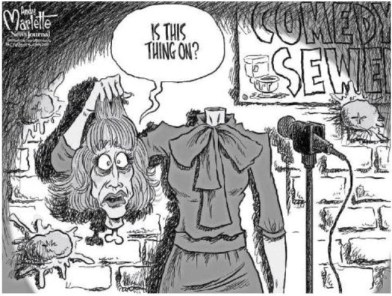
In that post, I referenced the vulgarities and vitriol spewing out of the mouths of Mss. Ciccone [Madonna] and Judd in their speeches at the 1/21/17 Women’s March, and Stephen Colbert’s 5/2/17 “comedy” monolog — and even worse, Kathy Griffin’s stupid social media posting of a photoshopped mock-up picture of herself holding a bloody severed head of President Trump.

Today, in a lunatic’s shooting rampage aimed at Republican members of Congress practicing for tomorrow’s annual Democrat-GOP baseball game for charity, four people were wounded, including a sitting United States Representative.  If you can imagine something possibly worse, consider what might have been the result of that rampage absent the quick thinking and heroic response of Capitol Police officers who were there. Almost all the media outlets and several congressmen/women interviewed observed that the rampage could easily have been a massacre of dozens or more of these Representatives. And … had Congressman Scalise [the injured Representative] not been there, these officers would not have been there because they were a part of his security detail [he is the Majority Whip, the third highest-ranking member of the House].

Are We Actually A Republic [i.e., A Representative Democracy]?

Not to wax philosophical, but there is more to this than meets the eye.  Philosophers tend to get into too much detail and offer too many optional views.  The way I see it, there are basically three main forms of government: democracy; republic (representative democracy); and totalitarianism. Absent a working version of one of these forms governing a population, the alternative is anarchy.

In theory, a true democracy can only work with an extremely small population.  The larger the population, the less practical a true democracy becomes [it would be logistically impossible to get a vote of all the people on every decision that is needed]. America was founded as a republic, a representative democracy. At a rapidly accelerating rate, our government is exhibiting many characteristics of totalitarianism [movement toward more central control, expanded powers of elected officials].

The Next Step?

So why would I mention all this in the context of these acts of disrespect and even hatred — and now actual homicidal violence toward elected officials? These are manifestations of anarchy. If you think America could not degenerate even further into anarchy, it would serve you well to pay more attention to events like those I referred to above and consider all of them in context with each other.  Perhaps an even more enlightened perspective could come from considering all them, in context with each other, and in context with the history of nations of the world over centuries. The logical answer to the chaos that anarchy brings is — you guessed it — totalitarianism.

I honestly hope that somehow, today’s event can be a trigger-point, something that wakes us all up and causes us to realize what we are becoming.  There is a tendency for the “togetherness” displayed immediately after events like this to be short-lived [look at the 2011 shooting of Congresswoman “Gabby” Giffords, or even 9/11, or Sandy Hook, or Orlando, or London, or … ]. The “sting” wears off, and we slip back into our pre-event mentality.

Particularly encouraging to me was the image I used as my picture for this post — Democrats, at their practice for tomorrow’s game, praying for the Republican victims of today’s tragedy. Also, the statements of the President, the Speaker and Minority Leader of the House, and other elected officials all stressed about as much solidarity — without partisan terminology — as I’ve seen in some time.

But, there was some evidence even late today that the “Kumbaya” atmosphere stemming from today’s shooting was nearing this “back to business” status before the evening news broadcasts were over [the “leak” from more “undisclosed sources” that special counsel Moeller is investigating President Trump for obstruction of justice; one of the media outlets was almost completely focused on this “news” during one of its primetime shows].

It’ll be interesting to see what dominates the “news” over the next few days, and whether there is any change in “tone” in partisan rhetoric.

img_7026 Charles M Jones

Charles M. Jones


Read This And Save Yourself A Lot Of Time

170516-james-comey-ac-855p_0b50cc00861259af65035991919a7e1e.nbcnews-ux-2880-1000

The 6/8/17 testimony of former FBI Director James Comey before the Senate Intelligence Committee is being hyped as much as the Super Bowl.  Democrats [and possibly some RINOs — Republicans In Name Only] are salivating, expecting the shoe [with Comey’s foot inside] to drop heavily on Trump, setting the stage for the final lap of their efforts to get him out of office so things can get back to what they consider to be “normal”.

Don’t bother to watch any of the live coverage or the endless expert panel discussions in the media that will continue regardless of the actual outcome of Comey’s appearance before the committee.  I can tell you now, the day before the event, exactly what all that will be [free — no extra charge 😀]

There Are Only Three Potential Outcomes

There actually are only three potential outcomes from Comey’s testimony. I’ll list them here in descending order of probability [opposite to the ascending order Trump’s detractors want to see]:

    1. No new news. Comey isn’t going to make himself indictable by saying that Trump pressured him to ease up on the Flynn [or any other] investigation [which is what his detractors are salivating for]. He is already on record as saying that hasn’t happened in his experience [“a situation where we were told to stop something for a political reason, that would be a very big deal. It’s not happened in my experience”]. If he changes that story, he would be indictable for perjury in the earlier testimony.  His answers will be either very vague [and therefore interpretable and “spun” any way both Trump’s supporters and detractors want to “spin” them] or something along the lines of “I can’t discuss that in an open session of this committee”. He will also be extremely careful to avoid inadvertently throwing out words and phrases that would shift the outcome to #2 below.
    2. Small tidbits of “new information” [actually, just fodder for more “fake news”].  Both supporters and detractors of the President will be listening very carefully for any word or phrase in Comey’s testimony that can be interpreted as exonerating Mr. Trump completely [supporters] or clearly indicating that the “smoke” is getting closer to the “fire” [detractors].
    3. The smoking gun Trump’s detractors have been waiting for. Clear, verifiable proof that Trump crossed the line and definitely obstructed justice [and is therefore impeachable]. This, of course, would be the Holy Grail Trump’s detractors desperately want.

If the outcome is #3, then Mr. Trump’s detractors [all Democrats — and some Republicans, mostly RINOs or “establishment” politicians”] will have won, the path to impeachment will pick up considerable steam, and the President’s agenda will essentially be tabled at least for the rest of this year.  If it is #1, there will be no appreciable change in media coverage other than the addition of speculation about what Comey didn’t say, or what he implied, or how evasive he was.  If it is #2, the media coverage will be more or less along the same divides by outlet or channel [a) obviously guilty, just not yet proven so; or b) just an innocent victim of a political witch hunt], but with huge amounts of “new” juicy content — “This simply heightens the need to continue this investigation until the ‘real truth’ [he’s guilty] comes out”, or “Surely we can now get past all this and move on to dealing with issues the American people want addressed”.

So there you have it. The whole scoop in this short post. I know my readers are grateful that I have saved them all the time they’d have spent finding this out by watching live coverage tomorrow and “post-mortem” coverage for at least days, probably weeks.

A Challenge

In closing, I’d offer this challenge.  … With all the free time I’ve given you: 1) read materials from both Democrats and Republicans on the real issues [the economy, tax reform, healthcare, immigration, terrorism, etc.] and draw your own conclusions as to which party’s positions are more in line with your own; and 2) begin actively “lobbying” your Senators and Representatives to push agendas that align with your views.

Thanks!

img_7026 Charles M Jones

Charles M. Jones


Are There Any Limits To Anything Anymore?

K Griffin CartoonWhat Do We Need To See, Hear or Read Before We Say “Enough!”?

I had never heard of Kathy Griffin until last week, but something about her posting of a now-published-worldwide mocked-up photo of herself holding a bloody, severed head of President Donald Trump was a “straw that broke the camel’s back” for me. The message in that imagery, whether intended or not, is that in her view, that’s what the President deserves — it could even be interpreted as an invitation to terrorists who have broadcast exactly that image [but with real pictures of real actions, not photoshopped composites]. Even worse, the “apology” video she posted the next day was about as sincere as Brian Williams’ 2015 apology for fabricating a story about his time in Iraq, calling it a “bungled attempt” to honor our service men and women. It was obvious that Ms. Griffin posted that apology only after her dumb post was denounced by everybody — even liberal media outlets — making it glaringly evident to her that she would be fired from CNN for doing such an irresponsible thing.  And one would think it couldn’t get worse still, but then she and Gloria Allred [her attorney, the high-profile lawyer who would defend the murderer of her grandmother if it meant getting national attention in the media], had a “press conference” in which Ms. Griffin was painted as the victim.  Get this [excerpts from that press conference]:

“I’m not afraid of Donald Trump. He’s a bully. I’ve dealt with old, white guys trying to keep me down my whole life, my whole career.    A sitting president of the United States, and his grown children, and the First Lady are personally, I feel, trying to ruin my life forever,” Ms. Griffith said, as she lamented being under investigation by the Secret Service.  Gloria Allred said the actions (presumably the Secret Service investigation) were “unpresidential” and that no other first family has taken issue with humor attacking a sitting president.

Now rewind to the Women’s March on 1/21/17, the day after Mr. Trump’s inauguration, and the extremely vulgar and inflammatory remarks made by Ms.Ciccone [Madonna] and Ms. Judd [see my post Women’s March Speeches]. Get this:

Ms.Ciccone [Madonna] … “It took us this darkness to wake us the f*** up.Today marks the beginning. … The revolution starts here. … And to our detractors that insist that this March will never add up to anything, f*** you. F*** you. … Yes, I’m angry. Yes, I am outraged. Yes, I have thought an awful lot of blowing up the White House.”

Ms. Judd. … The I Am A Nasty Woman “poem” she read was full of vulgar terminology [and I don’t mean just four-letter words]. I don’t want to quote any of it here.

Now fast forward to 5/2/17, to Stephen Colbert’s extremely vulgar and derogatory remarks about President Trump in his “comedy” monolog. Get this …

“Mr. Trump, your presidency — I love your presidency. I call it ‘Disgrace the Nation.’ You’re not the POTUS — you’re the BLOTUS. You’re the glutton with the button. You’re a regular ‘Gorge’ Washington. You’re the presi-dunce, but you’re turning into a real prick-tator. Sir, you attract more skinheads than free Rogaine. You have more people marching against you than cancer. You talk like a sign language gorilla who got hit in the head. In fact, the only thing your mouth is good for is being Vladimir Putin’s c**k holster. Your presidential library is gonna be a kids menu and a couple of ‘Jugs’ magazines. The only thing smaller than your hands is your tax returns. And you can take that any way you want.”

Are There Any Limits To Anything Anymore?

This kind of filth is being plastered across “news”paper headlines and TV screens around the clock, with talking-head “news” anchors as the messengers and panels of “experts” debating whether the First Amendment gives these people the right to say whatever they want without regard to how it might affect others [young children, for example, who might be just walking through a room where their parents are watching the “news”]. I’d be willing to bet that not a single one of our Founding Fathers involved in development of our Constitution and Bill of Rights envisioned anywhere near the level to which civility and decent-mindedness would have degraded 240 years later — or would agree today that this kind of vulgar and disrespectful language would be supported by the First Amendment they wrote. {I enclosed “news” in quotes because that term is used very loosely these days — see these past posts expanding on that issue: News or NNTN?Fake News Or Just Meaningless News?.}

Enough already! We need a movement, just as Ms. Ciccone said. But the movement we need is not the revolution she described — it’s a revolution focused on returning some degree of sanity to both what is happening and how the “news” of what is happening is reported. If we continue down the path we have been following in recent years, we are doomed.

img_7026 Charles M Jones

Charles M. Jones

Fixing The ACA Mess: Calling A Spade A Spade

caduceus-obamacare-cartoonTrue or False: All of our elected leaders would honestly like to come out of the “Repeal/Replace The ACA” versus “Fix/Enhance the ACA” war with a bipartisan solution that provides the best possible care for Americans at the lowest possible cost that we can afford. They just have differing views on what is the best way to reach that goal. … Unfortunately, as much as we might like to think the answer is “True”, it is “False”.

So What Outcome Would They Honestly Like?

For each Legislator, regardless of party affiliation, the short answer is two-fold [listed here in descending order of importance]: 1) “a solution that maximizes my personal chances of being re-elected”; and 2) “a solution that maximizes my party’s chances of keeping or gaining control of the Senate, the House, and the Presidency”. Personally, I honestly believe President Trump wants the more altruistic outcome [“True” above], but he is quickly learning that, absent a complete “draining of the swamp” first, it will be politics [“False” above] that drives the process.

Getting rid of these political drivers [so that logical thinking could creep into the minds of our leaders] would require one of two things: 1) at least eight Democrats in the Senate who would get on board with a bill that is characterized as Repeal/Replace; or 2) at least three Republicans in the Senate who would get on board with a bill that is totally void of even a hint any Repeal/Replace terminology and characterized more like “making the ACA even more perfect than it already is”. If #1 happens, I will assume that these eight Democrats will have gotten insider information about an approaching meteor that will completely destroy our planet before they are up for re-election. There is a better chance that #2 could happen, but when push comes to shove, I seriously doubt that it will. So since politics will likely continue to drive the process, let’s see if there is a logical, straightforward approach that even a dyed-in-the-wool career politician may be able to grasp conceptually. My hope is that any who do will be able to pursue this approach, package it however necessary to make it politically palatable to their colleagues, and move us toward a workable and sustainable solution.

It’s Not Rocket Science!

Note. I have written extensively on the subject of repealing and replacing the ACA [numerous blog posts, much of the content of which has been captured in this special page at this site: Repealing And Replacing The ACA].

It is incomprehensible to me that all legislators, in both parties, seem to be failing to grasp the easiest way to simplify the whole Repeal/Replace The ACA process: break current enrollees down into the three categories that are driving the costs, and proceed to tackle those three areas separately [but still simultaneously]. The three areas? … 1) Medicaid/CHIP expansion [CHIP, the Children’s Health Insurance Program, provides low-cost health coverage to children in families that earn too much money to qualify for Medicaid], 2) people who have obtained coverage under the ACA because they could not obtain coverage any other way, and 3) all other people who obtained coverage through the ACA exchanges.

Pinning down the total number of people who have health insurance obtained under the ACA, either because the expanded Medicaid/CHIP coverage made them eligible or because they purchased it through the Federal exchange or one of the State exchanges, is a task that requires more time than I was willing to consume to make my point in this post. So let’s just use the number all the “keep the ACA” folks keep yelling and say it’s 24 million people. Now let’s break that number down into the above three categories. …

Category 1 is the most accurately quantifiable of these categories. 17.1 million people have been added to Medicaid/CHIP rolls since passage of the ACA and phase-in of these features within it [Source: Medicaid.gov]. This could be overly optimistic, though [in terms of attribution to the ACA], because some sources estimate that as many as 2.1 million of these enrollees were eligible for these programs before passage of the ACA, but not enrolled [e.g., because they didn’t know they were eligible]. Since using the higher number could make it appear that I might be “fudging” to make my point, let’s just say there are 15 million people in this category [17.1 million minus 2.1 million].

Category 2 is almost impossible to quantify to any reasonable degree of accuracy because there is no way to trace why any particular enrollee obtained coverage through the Federal exchange or one of the State exchanges — i.e., because he/she found it more convenient, or because he/she had no other way to obtain coverage. The highest estimate I have found of the percentage of people obtaining insurance through the ACA exchanges because they could not get a policy any other way is 82% [I have referenced sources in previous posts on repealing/replacing the ACA]. To keep things simple, let’s just use that high-end estimate.  82% of 9 million [24 million minus the 15 million in category 1] puts 7.4 million in this category.

Category 3, of course, is dependent on how many enrollees are in Category 2. Under the logic described under category 2, there are 1.6 million people in this category [9 million minus 7.4 million].

Next, let’s recognize a fact that seems to be eluding all lawmakers: the people in category 1 are there not because of the bulk of the content of the ACA and all its complexities, but because of expanded eligibility for entitlement programs that were in operation decades before the ACA became law. Their coverage could have been provided through passage of a one-page law that simply expanded the eligibility thresholds for those programs and provided exactly the same Federal reimbursements to the States that are outlined in the ACA.

There’s another thing that none of our legislators seem to realize [or if they do, they are (surprisingly) not articulating their thoughts about it in media interviews]. Comparing how many people would be covered X years from now under the [new] AHCA with how many would be covered under the [current] ACA is a ridiculously meaningless statistic because the ACA is not sustainable in its current form [even Democrats reluctantly (and tactfully) agree with that].

So What’s The Deal?

So if all the Chicken Little “The sky is falling!” legislators could just dispense with that rhetoric, and if the RINO [Republican In Name Only] element of the Republican party could take this simplified [and I would argue, more accurate] view of the task at hand, it should be possible to actually come to a bipartisan solution built around two components: 1) deciding whether to continue funding expanded Medicaid/CHIP coverage [which will affect people in category 1]; and 2) developing a new healthcare financing system that deals with people in categories 2 and 3. To the extent passage of the resulting law causes people in any of the three categories to initially lose their coverage, just call a spade a spade [i.e., “We simply can’t afford the cost of that big an expansion of the decades-old Medicaid/CHIP programs” for people in category 1] and include a transition or bridge plan for people in categories 2 and 3 that avoids abrupt coverage loss and allows them to transition to the new system outlined by the AHCA.

The Chinese philosopher Lao Tzu said “If you do not change direction, you may end up where you are heading.” I hope our legislators realize the truth in this statement, as well as the truth in Lewis Carroll’s statement “If you don’t know where you’re going, any road will take you there”. Right now, our legislators are frantically trying to put together a politically palatable solution [which means they’re simply shifting with the wind]. It’s time to wake up and get this done!

img_7026  Charles M Jones

Charles M. Jones

1st Amendment, Responsibility, and Common Decency

I am writing this post after seeing news coverage of the “walkout” that occurred when Vice President Pence began delivering his commencement address at Notre Dame last weekend. The fact is that it was only “several dozen” [out of 2,081] graduates who got up and walked out as Mr. Pence began his address. But the New York Times reported it like this: “Online video of the ceremony showed a large number of young people filing out of the stadium as the vice president began to congratulate the graduates and their families. Around them, the audience erupted into a mixture of boos and applause“. Now, if you Google “Pence Notre Dame commencement speech”, the only items that show up have to do with the demonstrations — interviews with the students, why they did it, how they “feel”, etc. As I watched the video of the actual news coverage, I saw no “eruption” of the audience, either the boos or the applause.

At least they weren’t shouting and throwing things, so maybe I should be thankful for that and just put my troubled thoughts about the event down. After all, these graduates were “exercising their First Amendment right” to express their displeasure with Trump Administration policies with which they do not agree [and perhaps with some of Mr. Pence’s stated positions on certain issues]. However, there is much more to this particular demonstration than meets the eye.

I’ve alluded to distorted media reports in several of my blog posts [see News [or NNTN?] Circa 2017 and Fake News Or Just Meaningless News? for just two examples].  My concern here is the disrespect these students showed toward the Vice President of our country. This honorable and decent man a) came at the invitation of the leadership of their university; b) was the first U. S. Vice President to deliver a commencement address at that university; and c) is one of only about seven millionths of one percent of all U. S. citizens who have ever lived to become first in the line of succession to the highest office in the world. Those things alone should have engendered enough respect for Notre Dame’s leadership, and for this man, to prompt these students to seek less blatant, less in-your-face ways to express their disdain for the policies they attribute to the President and/or to him.

I wonder how many of these students actually know the genesis of the very right they were exercising, and how many gave any thought to whether this method of exercising it was the best way to do so, and how many gave any consideration at all as to whether negative impressions of them because of their chosen tactic might outweigh any positive impact other tactics might have had in addressing their concerns? My guess is that for most if not all of these questions, the answer is “None”.

The First Amendment And The “Bill Of Rights” — Roots

There’s a very good reason why the first ten Amendments to the constitution are collectively referred to as the Bill of Rights. As you read through them, it becomes very clear that at least some of our Founding Fathers, particularly at the State level, wanted to ensure that, as the new Federal government developed, these basic rights didn’t get lost in the shuffle. They were proposed following an oftentimes bitter 1787–88 battle over ratification of Constitution, and had been crafted to address the objections raised by Anti-Federalists, adding to the Constitution specific guarantees of personal freedoms and rights, clear limitations on the government’s power in judicial and other proceedings, and explicit declarations that all powers not specifically delegated to Congress by the Constitution are reserved for the states or the people. They were officially ratified in 1791, two years after the original constitution was approved by Congress [subject, according to Article VII, to ratification by nine of the thirteen States — so actually, this Bill of Rights essentially became a requirement for reaching that level of ratification].

I think there’s also a very good reason why the very first of those ten Amendments has to do with freedom of speech — specifically, it prohibits the making of any law respecting an establishment of religion [a tenet which nowadays is grossly over-interpreted by many as “separation of Church and State”], ensuring that there is no prohibition on the free exercise of religion, abridging the freedom of speech, infringing on the freedom of the press, interfering with the right to peaceably assemble, or prohibiting the petitioning for a governmental redress of grievances. Having the right to express our opinions freely, without fear of reprisal, is clearly a fundamental concept woven into the documents defining our nation.

But With Rights Come Responsibilities

However, I believe anybody should be able to agree that there are at least some bounds within which our exercise of this [or any other] right should be carried out. Most obviously, it is highly doubtful that the framers of our founding documents, by including this right, thought that people exercising them would destroy property or cause physical injury to others. But on most days, if there is no example that day, you wouldn’t have to go back more than a few weeks at most to find several examples of exactly that kind of violence in demonstrations — e.g., demonstrations at Berkeley University just last month, many Black Lives Matter demonstrations, etc.

The missing element in all of this is respect for others, and the ever-present common element is narcissism — complete focus on what I think is best, without regard for other people’s views and feelings. That’s most interesting — the very behavior people accuse our President of exhibiting is apparent in their own behavior. I guess there’s a lot of good common sense in the old saying “What goes around, comes around”.

Thanks!

img_7026 Charles M Jones

Charles M. Jones