This is my first post to this blog since October 30, 2024, just six days prior to what I believe will be viewed retrospectively as one of the most — and from a Christian perspective, possibly the most — critical and impactful presidential election in our country’s history. That post, Christians Can Determine Who Becomes Next U.S. President, was a plea that began with the sentence “If you are a born-again, God-fearing, Bible-studying, praying Christian, I implore you to read this post.” My purpose now is to offer my observations about the overall “atmosphere” in the country since that election, and share very apropos insights from prominent Christian leaders through a 1976 book, a 1999 book, and a 2025 article that I believe collectively answer the question What Now Shall We Do?
The “atmosphere” in our country
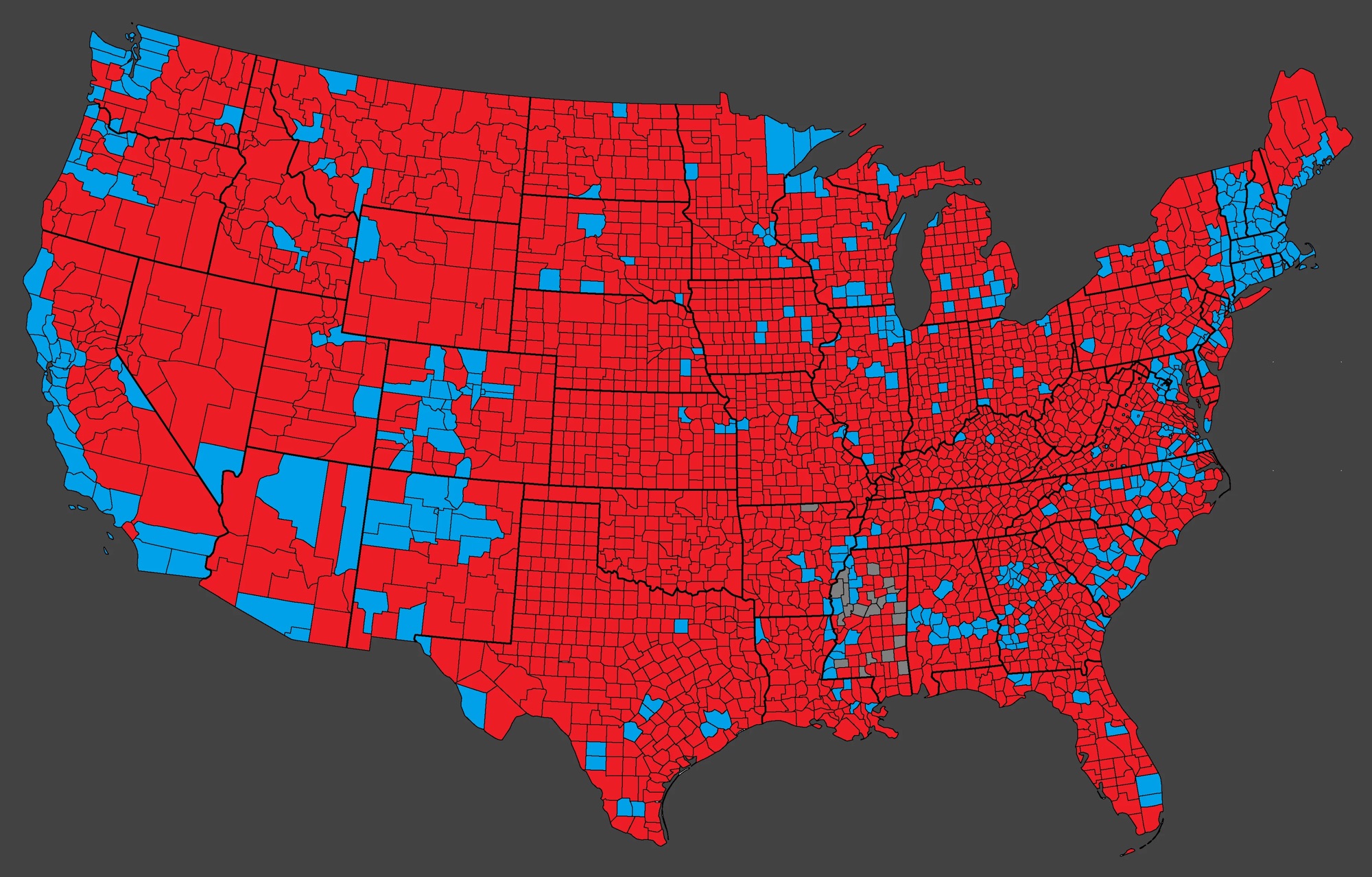
The “atmosphere” in our country from the last month or so of the election campaign through Election Day and the ensuing months has been interesting. Reactions among pro-Trump and anti-Trump factions in our extremely polarized country to the realization of what a landslide-level change-of-direction mandate the American people issued have obviously been many and varied. There is understandably almost uniform jubilation among Trump’s supporters. What is most interesting to me, though, is the vastness of the range of words needed to describe the reactions among anti-Trump factions — understandably, frustration and disappointment, but many others like denial, rejection, and resistance, manifesting themselves in the form of delay tactics by Legislators in approving the President’s cabinet nominees, open refusal of state and local leaders to comply with new legally-promulgated federal directives, organized demonstrations [although vastly diminished in size from 2017,] and even state and local laws and ordinances rushed to quick passage in some jurisdictions.
Recent polls indicate that a solid majority of Americans approve of the direction shaping up rapidly even during the first week of this Administration, so resistance among legislators is particularly puzzling. Not surprising is the “legacy” press’ lingering denial and an attitude of “hunkering down” on negative coverage that has prevailed in that arena since Donald Trump began his first campaign for the presidency in 2016. Only what appears to me to be a very small number of media pundits have an attitude that shows they have heard and understand what the People have said and seem to be trying to find where they can “fit in” to a “new normal” despite their vicious coverage in the past.
Three generations of apropos insights from prominent Christian leaders
In his 1976 book [200 years How Should We Then Live? The Rise and Decline of Western Thought and Culture, Francis Schaeffer examined the preceding 200 years of Western civilization, arguing that its decline to that point stemmed from abandoning a Biblical worldview. He traced cultural, philosophical, and moral developments from Ancient Rome to the modern era, highlighting how a society’s worldview shapes its trajectory.
A generation later [1999,] Charles Colson wrote How Now Shall We Live?, in which he postulated that Christianity provides a comprehensive framework for understanding reality, addressing life’s fundamental questions: Where did we come from? What has gone wrong with the world? And how can it be fixed? Colson also argued [as did Schaeffer] that the decline of Western culture had been a result of rejecting Biblical truth in favor of secularism, relativism, and materialism. These ideologies, Colson contended, fail to offer meaningful answers to humanity’s deepest needs. By contrast, the Christian worldview provides a coherent understanding of Creation, the Fall, and Redemption, offering hope and purpose. He urged Christians to challenge cultural norms and influence society through active engagement in areas such as politics, education, science, and the arts, and to defend their faith, confront cultural challenges, and offer hope to a world in crisis.
Another generation later [about two months after President Trump’s landslide election to his second term,] Franklin Graham published an 1/1/25 article entitled Pray for Donald J. Trump. On January 20th, he was one of the pastors who offered invocation prayers at the inauguration. I believe this article boils down to a single admonition the philosophical/theological warnings articulated by Schaeffer and Colson in those generations and Graham’s in this and many other articles, speeches and sermons in this generation. That admonition: pray for our country, our President and those in other leadership positions in our government, and above all that God will not continue to remove His mighty hand of protection from us as a nation as the massive change in direction now underway unfolds.
Pray for our country, our President, and those in other leadership positions in our Government
Below my auto-signature are specific things Franklin Graham outlined in the above-referenced article that he believes should be included in our prayers — an excellent guide that I am certainly including in my prayers. And I like the way it ends:
So pray. Pray fervently. Pray diligently.
A Closing Remark
Although one could argue that the motivations that led us to where we are now were not all expressed as Christian by the general public, the current major change in direction and path forward are clearly more in line with Biblical principles than they have been in many years. So in my opinion, tightly coupled with that admonition is my personal desire that our actions going forward will be clear and convincing evidence that as a nation we have at least taken a major step toward “humbling (our)selves, and pray(ing) and seek(ing) (God’s) face, and turn(ing) from (our) wicked ways,” resulting in God‘s “hear(ing) from heaven, and … forgiv(ing) (our) sin and heal(ing) (our) land” [II Chronicles 7:14 NKJV.]
Thanks for reading this post, and if you regularly follow my Blog, for that, too. Please consider sharing this or other posts with your friends, colleagues and associates.
Charles M. Jones
That President Trump will look to God each and every day for wisdom, guidance and discernment. Since the Bible says God’s purposes will prevail, our leaders need to seek God’s counsel for wise, lasting progress. “The Lord brings the counsel of the nations to nothing; He makes the plans of the peoples of no effect. The counsel of the Lord stands forever, the plans of His heart to all generations. Blessed is the nation whose God is the Lord” [Psalm 33:10-12.]
And how should we pray in particular for our president?
- First and foremost, that he and his advisers will bend their hearts toward God and humbly seek His will. The Bible says “The king’s heart is in the hand of the Lord, like the rivers of water; He turns it wherever He wishes” [Proverbs 21:1.] Almighty God, the King of Kings, rules over all presidents, prime ministers, chancellors, kings and queens. This also implies that a “king” should be ever humbling himself before the Lord and asking for His will to be done.
- That he will surround himself with men and women who will give him Godly counsel. No one person has enough wisdom to always make the right decisions. A president receives an abundance of information from dozens of different sources, but what he especially needs is the wisdom and discernment that comes from people who know God and His ways.
- That the Lord will protect him from harm. There are plenty of adversaries around the world who would love nothing more than to see President Trump fail, not to mention our adversary the devil, who especially targets those in leadership. Never underestimate the wiles of Satan, but don’t overestimate him either. Christ defeated him on the cross and one day soon will cast him into Hades.
So pray. Pray fervently. Pray diligently.
Share This On Social Media:










 www.USAparadigm.com