
A Seminal Time In Our History?


In my last post, I alluded to the current “atmosphere” in our country since the recent election: the excitement of both our still-forming leadership team and a wide swath of our population, contrasted by the anger and even “backlash” and openly-articulated resistance in Democrat leadership and a narrower swath of our population [and most of the “legacy” media] to President Trump‘s agenda. In this one, I will try to express from a much broader historical perspective how this “atmosphere” in this decade mirrors in many ways two of the decades in our history that most historians agree were arguably the most seminal points. Obviously, that poses the question “Is this a seminal time in our history?

Something that is seriously lacking in our culture nowadays, particularly in many people in leadership roles, is a perspective broad enough to rise above the din of day-to-day news and commentary and draw conclusions about how current events fit into an inception-to-date view of our country. Even our leaders seem to be down in the forest among the trees rather than viewing the situation from an airplane at least hundreds of feet above the forest, or perhaps even 30,000 feet, or even from a capsule orbiting the planet. The “atmosphere” I described in my opening paragraph clearly paints the picture that polarization in our leadership has actually intensified since the November 2024 election. The Democrat party has now even formally developed a resistance-based platform, which if followed its leaders appear to believe will result in a massive shift of legislative majority power back to them in 2026 and a full reversal by 2028 of the path chosen by a majority of our citizens three months ago.

So who is “right?”

So who is “right?” Who defines what is “right” for our country? Will the current path and direction result in a better situation as of 10/31/2028? Who should define what situation on 10/31/2028 would be “better” than the situation on 10/31/2024? Who will define what situation on 10/31/2028 would be “better” than the situation on 10/31/2024? These are questions that can only be answered from a much broader perspective than appears to currently be in the mix. For me, the bigger question is the title I gave this post: Is this a seminal time in our history? In considering it, we would be well served as a nation to understand that our perspective is never the broadest: “‘My thoughts are not your thoughts, nor are your ways My ways,’ says the Lord. ‘For as the heavens are higher than the earth, so are My ways higher than your ways, and My thoughts than your thoughts’” [Isaiah 55:8-9 NKJV.]

Are we in a seminal period in our country’s history?

I recently watched a ten-minute discussion between a media commentator and a well-known college president. At one point in that discussion the college president expressed his sense that this is a seminal decade in our country’s history, likening it to the 1770s [resulting in a revolution and our founding] and the 1850s [resulting in the Civil War.] Being well-versed and widely published in history, particularly American history, he described very enlightening similarities in the “atmosphere” in America during those seminal decades and the “atmosphere” in this decade.

In closing, I’d offer this thought to challenge those reading this post to consider what I’ve written here in context with these words from our first two Presidents:

“However [political parties] may now and then answer popular ends, they are likely in the course of time and things, to become potent engines, by which cunning, ambitious, and unprincipled [people] will be enabled to subvert the power of the people and to usurp for themselves the reins of government, destroying afterwards the very engines which have lifted them to unjust dominion.” George Washington

“There is nothing which I dread so much as a division of the republic into two great parties, each arranged under its leader, and concerting measures in opposition to each other. This, in my humble apprehension, is to be dreaded as the greatest political evil under our Constitution.” John Adams

Thanks for reading this post, and if you regularly follow my Blog, for that, too. Please consider sharing this or other posts with your friends, colleagues and associates.

Charles M. Jones

What Now Shall We Do?

This is my first post to this blog since October 30, 2024, just six days prior to what I believe will be viewed retrospectively as one of the most — and from a Christian perspective, possibly the most — critical and impactful presidential election in our country’s history. That post, Christians Can Determine Who Becomes Next U.S. President, was a plea that began with the sentence “If you are a born-again, God-fearing, Bible-studying, praying Christian, I implore you to read this post.” My purpose now is to offer my observations about the overall “atmosphere” in the country since that election, and share very apropos insights from prominent Christian leaders through a 1976 book, a 1999 book, and a 2025 article that I believe collectively answer the question What Now Shall We Do?

The “atmosphere” in our country

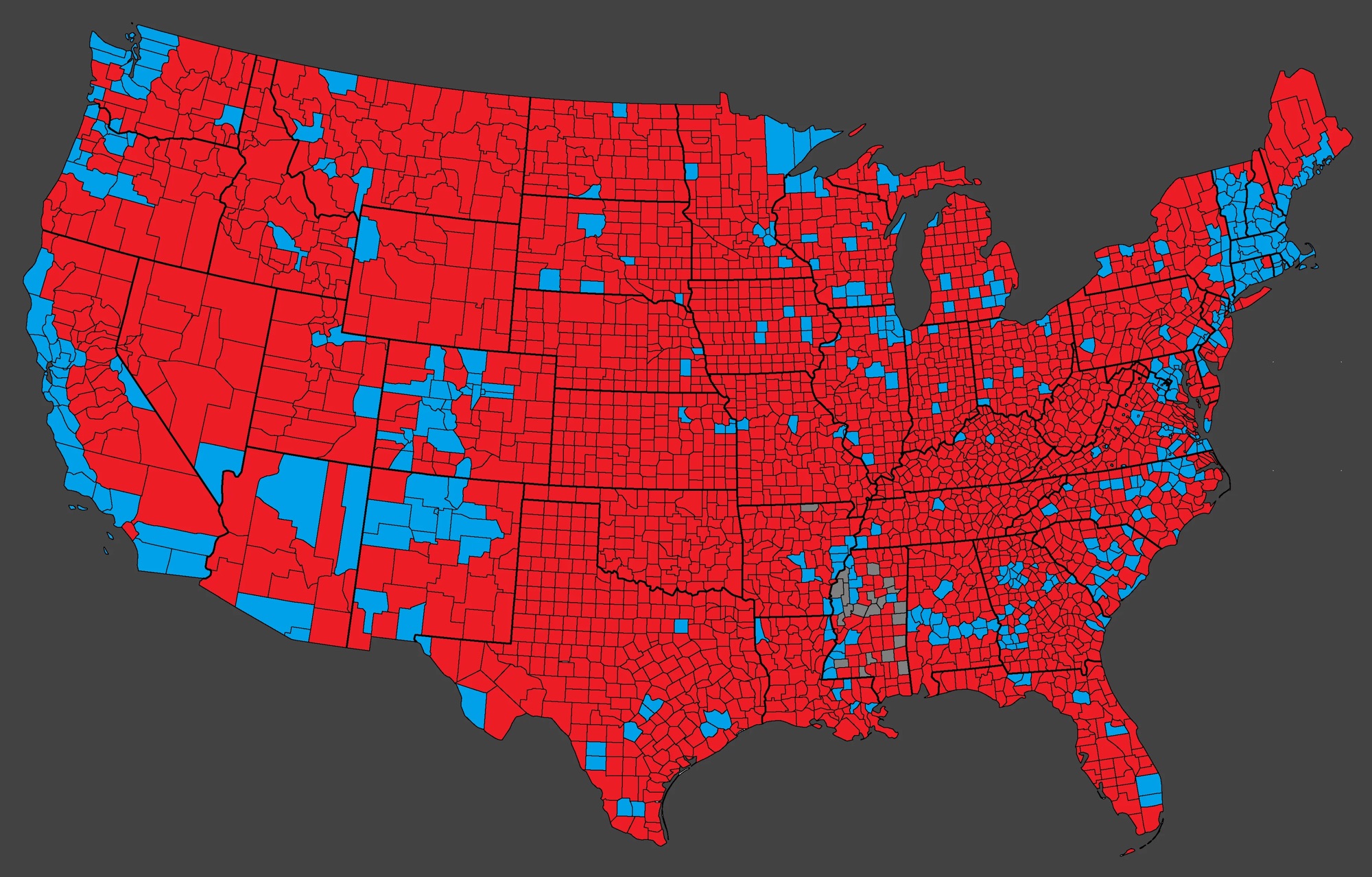
The “atmosphere” in our country from the last month or so of the election campaign through Election Day and the ensuing months has been interesting. Reactions among pro-Trump and anti-Trump factions in our extremely polarized country to the realization of what a landslide-level change-of-direction mandate the American people issued have obviously been many and varied. There is understandably almost uniform  jubilation among Trump’s supporters. What is most interesting to me, though, is the vastness of the range of words needed to describe the reactions among anti-Trump factions — understandably, frustration and disappointment, but many others like denial, rejection, and resistance, manifesting themselves in the form of delay tactics by Legislators in approving the President’s cabinet nominees, open refusal of state and local leaders to comply with new legally-promulgated federal directives, organized demonstrations [although vastly diminished in size from 2017,] and even state and local laws and ordinances rushed to quick passage in some jurisdictions.

Recent polls indicate that a solid majority of Americans approve of the direction shaping up rapidly even during the first week of this Administration, so resistance among legislators is particularly puzzling. Not surprising is the “legacy” press’ lingering denial and an attitude of “hunkering down” on negative coverage that has prevailed in that arena since Donald Trump began his first campaign for the presidency in 2016. Only what appears to me to be a very small number of media pundits have an attitude that shows they have heard and understand what the People have said and seem to be trying to find where they can “fit in” to a “new normal” despite their vicious coverage in the past. 

Three generations of apropos insights from prominent Christian leaders

In his 1976 book [200 years  How Should We Then Live? The Rise and Decline of Western Thought and Culture, Francis Schaeffer examined the preceding 200 years of Western civilization, arguing that its decline to that point stemmed from abandoning a Biblical worldview. He traced cultural, philosophical, and moral developments from Ancient Rome to the modern era, highlighting how a society’s worldview shapes its trajectory.

A generation later [1999,] Charles Colson wrote How Now Shall We Live?, in which he postulated that Christianity provides a comprehensive framework for understanding reality, addressing life’s fundamental questions: Where did we come from? What has gone wrong with the world? And how can it be fixed? Colson also argued [as did Schaeffer] that the decline of Western culture had been a result of rejecting Biblical truth in favor of secularism, relativism, and materialism. These ideologies, Colson contended, fail to offer meaningful answers to humanity’s deepest needs. By contrast, the Christian worldview provides a coherent understanding of Creation, the Fall, and Redemption, offering hope and purpose. He urged Christians to challenge cultural norms and influence society through active engagement in areas such as politics, education, science, and the arts, and to defend their faith, confront cultural challenges, and offer hope to a world in crisis.

Another generation later [about two months after President Trump’s landslide election to his second term,] Franklin Graham published an 1/1/25 article entitled Pray for Donald J. Trump. On January 20th, he was one of the pastors who offered invocation prayers at the inauguration. I believe this article boils down to a single admonition the philosophical/theological warnings articulated by Schaeffer and Colson in those generations and Graham’s in this and many other articles, speeches and sermons in this generation. That admonition: pray for our country, our President and those in other leadership positions in our government, and above all that God will not continue to remove His mighty hand of protection from us as a nation as the massive change in direction now underway unfolds.

Pray for our country, our President, and those in other leadership positions in our Government

Below my auto-signature are specific things Franklin Graham outlined in the above-referenced article that he believes should be included in our prayers — an excellent guide that I am certainly including in my prayers. And I like the way it ends:

So pray. Pray fervently. Pray diligently.

A Closing Remark

Although one could argue that the motivations that led us to where we are now were not all expressed as Christian by the general public, the current major change in direction and path forward are clearly more in line with Biblical principles than they have been in many years. So in my opinion, tightly coupled with that admonition is my personal desire that our actions going forward will be clear and convincing evidence that as a nation we have at least taken a major step toward “humbling (our)selves, and pray(ing) and seek(ing) (God’s) face, and turn(ing) from (our) wicked ways,” resulting in God‘s “hear(ing) from heaven, and … forgiv(ing) (our) sin and heal(ing) (our) land” [II Chronicles 7:14 NKJV.]

Thanks for reading this post, and if you regularly follow my Blog, for that, too. Please consider sharing this or other posts with your friends, colleagues and associates.

Charles M. Jones

Things We Should Include In Our Prayers [from Pray for Donald J. Trump]

That President Trump will look to God each and every day for wisdom, guidance and discernment. Since the Bible says God’s purposes will prevail, our leaders need to seek God’s counsel for wise, lasting progress. “The Lord brings the counsel of the nations to nothing; He makes the plans of the peoples of no effect. The counsel of the Lord stands forever, the plans of His heart to all generations. Blessed is the nation whose God is the Lord” [Psalm 33:10-12.]

And how should we pray in particular for our president?

  • First and foremost, that he and his advisers will bend their hearts toward God and humbly seek His will. The Bible says “The king’s heart is in the hand of the Lord, like the rivers of water; He turns it wherever He wishes” [Proverbs 21:1.] Almighty God, the King of Kings, rules over all presidents, prime ministers, chancellors, kings and queens. This also implies that a “king” should be ever humbling himself before the Lord and asking for His will to be done.
  • That he will surround himself with men and women who will give him Godly counsel. No one person has enough wisdom to always make the right decisions. A president receives an abundance of information from dozens of different sources, but what he especially needs is the wisdom and discernment that comes from people who know God and His ways.
  • That the Lord will protect him from harm. There are plenty of adversaries around the world who would love nothing more than to see President Trump fail, not to mention our adversary the devil, who especially targets those in leadership. Never underestimate the wiles of Satan, but don’t overestimate him either. Christ defeated him on the cross and one day soon will cast him into Hades.

So pray. Pray fervently. Pray diligently.

Illegitimate? Really?

On the eve of this day when we honor a man I believe was one of the greatest people of modern times, I was appalled when I saw news coverage of a sitting U.S. Representative saying “I don’t see this president-elect as a legitimate president”. This statement came from John Lewis, the Representative from Georgia’s 5th District [which includes the Atlanta area], on NBC’s Meet The Press program.

Note. … I am nearing completion of my regular weekly post, and will publish it on the usual mid-week schedule. I simply could not let this deplorable situation pass, however, without at least expressing my very negative view of it.

I know what a Civil Rights icon Congressman Lewis is, and I know that if I were a better-known commentator I’d be excoriated in the media as a racist for saying this, but this man has greatly reduced his own stature in my eyes. Clear proof that Lewis’ remark was pure politics is the fact that he took the opposite position last year when taking issue with people speaking disparagingly of President Obama — “Even if Obama’s critics don’t like him as a person, they should at least respect the position” [2016 interview on CNBC].

I grew up in the Deep South [Louisiana], and my preteen through high school years were in the late 1950s to early 1960s. That piece of information would cause many people who don’t know me to think that I’m just another white man putting down on a black man. Although the times, and to a considerable extent the region, of my upbringing exposed me to the racial divide that existed in those days, my upbringing was one that rose above all that and caused me to be just as appalled over racist activities as anybody from the North or the Midwest could possibly have been. My father was a school superintendent, and by his words, his demeanor and his actions, he was responsible for all schools in the parish, not just the white schools. In the excellent home environment that he and my mother provided, I developed an attitude of respect for people regardless of their race.

I say that simply to say that my repudiation of Congressman Lewis’ remark has absolutely nothing to do with his race. In fact, he and many other [certainly not all] black people in leadership roles these days are responsible for what, in many ways, is a worse racial divide than the one of my formative years. But maybe this scenario can end up being constructive. One way that outcome could come about would be for a considerable number of black leaders to take the high road and put their country above their politics and their sour grapes and let this inauguration be what it is supposed to be — a celebration of the peaceful transfer of power that is a bedrock of our country’s system of government [interestingly, that’s the way Democrats described this week when they were confident last November of a Clinton victory].

So in the spirit of what our country has been and hopefully has not completely lost, and in remembrance of the great man we honor today and the hope that those of his ilk will prevail over those of Representative Lewis’ ilk, let me close by saying that I hope everybody reading this has had a happy Martin Luther King Day.

Thanks!

img_7026 img_7043

Charles M. Jones

Election Aftermath – 5

b0a7ee87-8f4c-423f-ae98-d26b389ada68-2060x1236I mentioned in my second post in this seven-day The Aftermath series that I had purposely been consuming a bit more than my usual amount of daily media coverage in order to get a good feel for whatever post-election climate was developing. Now, after consuming that higher-than-usual share of media coverage for five post-election days, I’ll mention two more observations/conclusions to add to what I have shared in posts two, three and four.

The “Gimme” Mentality

First, in a conversation a good friend of mine and I had last Friday, he said something that has resonated with me in my daily mental “cataloging” of thoughts about content for upcoming posts to this blog. He said “One thing that stands out to me is how large the ‘gimme’ population is”. That remark has come to my mind several times since then as I’ve since seen pictures and video clips of demonstrators carrying signs and chanting “What do we want? (Whatever)!. When do we want it? Now!”.

Relating these demonstrations to other “anti this” and “pro that” demonstrations that go on all the time amplifies the underlying concept my friend was elucidating — too many people these days seem to believe that when they think something would be a good thing to have, “somebody” should “give” it to them — and that “they” should “give” it to them now. That is a very dangerous mentality, and it is contrary to the fundamental tenets of this country’s founding.

The mechanics of our democratic republic were not designed to provide instant gratification. In fact, they were intentionally designed to avoid changes that might, in the absence of safeguards built into them, fail to allow for the Law of Unintended Consequences — i.e., unforeseen new problems often caused by implementation of the “solution” to an existing problem. One example of these safeguards is the fact that there are two- [for Representatives], four- [for the President], and six- [for Senators] year terms, so there is never a single election in which all incumbents could be removed from office [although many people — at times, I must admit, including me — think that might not be such a bad idea!].  Another example is the President’s authority to veto legislation passed by the Legislature [which in most situations requires only a simple majority vote], and still another is the Legislature’s authority override a Presidential veto with a 2/3 vote in both the House and the Senate.

The mechanics of our democratic republic were designed, however, to empower citizens to do two things: 1) garner enough support among their fellow citizens to bring causes they believe to be important to the attention of their elected Legislators [with the goal of ultimately producing legislation furthering those causes]; and 2) run for office themselves and/or support and vote for candidates whose ideologies and/or modus operandi align with theirs. Neither of these two things provides instant gratification. They both require knowledge of and involvement in the mechanics of our governmental processes — and they both require dedication of time, often years.

Too Many People Have Too Much Time on Their Hands

The second observation/conclusion I’d offer in this post is that we have too many people with too much time on their hands. Although demonstrations are a right stemming from the First Amendment [and in my opinion have at times been a force for good in our history], I believe there is something we should learn from much of that activity going on now. First, and unfortunately, “real” unemployment [including people who have dropped out of the workforce altogether] is at an historically high level. I am among those who believe that the outcome of this election will result in improvement in the employment situation more rapidly than would have been the case under Democrat control, but large-scale improvement will not be immediate.  Essentially, through the election, we have done all we can do at the moment for that segment of people with too much time on their hands.

Another big segment of people with too much time on their hands is college students [many of the current demonstrations are on college campuses or are dominated by college students even though they are occurring in the streets of the cities where those colleges are located].  There has been a huge shift over the past few decades in the general mentality of college students.  When I was in college, we had a “soap box” area where people could voice their opinions about issues of the time. At most times on any given day, somebody was on the “soapbox” doing exactly that, and there was usually a small crowd around whoever was speaking. But most students simply did not have the time to be involved in demonstrations requiring them to be away from their classes most of a day or their study time at night.

I earned about half my college expenses for my first two years, and more than 75% of them during my last two years. I was in an Engineering program, which at that time required 143 semester hours for graduation [fewer than half of Engineering students were getting that done in four years]. I didn’t get it done in four years on my intelligence, but on my perseverance and determination. My wife was a year younger, and with equal perseverance and determination, condensed her academic schedule in Education to three years so we could graduate together.

My point is not an attempt at self-aggrandizement, and I know that there are many college students today who have similar stories, but this kind of focus does not seem to be the dominant mentality on college campuses these days. There seems to be less focus on what college is supposed to be [preparation for a productive career] and more on the social and avocational elements of college life.

It is my sincere hope that changes in the underlying causes of both of these sources of idle time will wane as our economy improves, and that the reasons for the demonstrations will diminish as well. I believe the outcome of this election will result in a climate in which both of these things will happen.

Thanks!

img_7026 img_7043

Charles M. Jones

Election Aftermath – 3

Out of respect for our veterans on this day that we honor them each year, I’ll make this post short and to the point. The rights of all citizens of this nation exist because our founding fathers were willing to step up to the challenges and risks of forming this nation and for these rights say “We sacrifice our lives, our fortunes, and our sacred honor”. These rights have been preserved and defended by thousands of brave men and women who have fought and died to protect them — and they are still being protected today by the finest military forces on the planet.

It is appalling to me to see the hatred and vitriol on display after the 11/8/16 election. It dishonors the people who gave these very protestors their right to protest. Dr. Martin Luther King, Jr. set the bar for peaceful, non-violent protests as a way to raise the country’s consciousness of issues.  People ostensibly representing both “the Clinton side” and “the Trump side” are passing so far under that bar that they don’t even see that it’s there.

I hope and pray that all of this is just “flash in the pan” temper tantrums being thrown by those who feel they lost and unwarranted gloating by those who feel they won, and that it will subside quickly as all of them realize how foolish they look. All of them need to realize that they are first Americans, and then members of whatever constituency(ies) they identify with. Without that attitude, this nation will not survive in the long run.

Thanks to our veterans, living and dead, and thanks to the men and women currently serving in all branches of the military today. We appreciate what you do, and we respect you for your willingness to protect the freedoms we all enjoy. People in the streets who are holding vitriolic signs and shouting hateful and profane threats and destroying property are not rising to the bar set by Dr. King, are they are not representative of the massive numbers of Americans who will not see this post but who I am certain would join me in saying what I’ve said here.

Thank you!

img_7026 img_7043

Charles M. Jones

Accountability

I am confident that a major paradigm shift [as described in one of the pages on this site] is underway in this country. There are many factors driving this shift [described throughout this site], a major one of which is that a growing number of Americans of all political persuasions and party affiliations are simply fed up with the current paradigm [how things currently work]. One of the main things they are fed up with is the lack of accountability in government. This post is on that topic.

IMG_7043.jpgI am confident that a major paradigm shift [as described in one of the pages on this site] is underway in this country.  There are many factors driving this shift [described throughout this site], a major one of which is that a growing number of Americans of all political persuasions and party affiliations are simply fed up with the current paradigm [how things currently work].  One of the main things they are fed up with is the lack of accountability in government.  This post is on that topic.

To illustrate the point, I’ll use a brief tidbit of history that is in stark contrast with what we see routinely nowadays in news stories. …

On June 6, 1944, nearly 3 million Allied troops readied themselves for one of the greatest military operations in world history — D-Day, and the ensuing push that led to Hitler’s defeat.  At least 160,000 of those troops landed on the shores of Normandy, France. As they stormed the beaches, General Dwight D. Eisenhower’s confident words summed up the incredible significance of their mission:

“You are about to embark upon a great crusade, toward which we have striven these many months. The eyes of the world are upon you,” he wrote in a famous letter sent to troops before the assault. “We will accept nothing less than full victory! Good Luck!”

But there’s another letter that he set aside in case of failure. What if we lost? General Eisenhower had doubts in the face of a “well trained, well equipped and battle-hardened” enemy. If the invasion of Normandy had failed, this is the message he would have relayed to the public [the image displayed in this post is from his actual handwritten note]:img_7069

“Our landings in the Cherbourg-Havre area have failed to gain a satisfactory foothold and I have withdrawn the troops. My decision to attack at this time and place was based upon the best information available. The troops, the air and the Navy did all that Bravery and devotion to duty could do. If any blame or fault attaches to the attempt it is mine alone” [emphasis mine]. [He accidentally dated the letter July 5; it was, of course, June 5 when he scratched out this draft.]

Of course, we know that this “defeat speech” was not needed, and the success of that mission might very well have changed the course of human history for the better because it is viewed by most military experts as the turning point in the Allies’ efforts to keep Adolf Hitler from achieving his evil dreams of world domination.

I introduced this blog post with that bit of history for one reason — to use Eisenhower’s “defeat speech” as a standard against which to measure accountability nowadays, clearly showing that the very concept of accountability has practically disappeared from our leadership since Eisenhower’s time.  I’m not touting Eisenhower or trying to say that he was perfect, but I do believe he was part of a generation that understood what accountability means, how it should be expected to play out in a particular situation, and why that view of it is important.

General Eisenhower knew very well the magnitude of the “go/no-go” decision he needed to make on June 5, 1944. A major storm was headed in the direction of the beaches where the invasion would occur. If he delayed for a day or two, the element of surprise would be compromised.  If the brunt of the storm hit at just the wrong time during the invasion, numerous logistical elements of the attack could go wrong, increasing the number of casualties and decreasing the chances of success.  He no doubt had detailed estimates of the huge number of casualties there would be even if everything went well. All of this was a tremendous weight to bear.

He knew that if the invasion was successful, he would share in the fruits of that success — and that if it failed, he would have to absorb the blame and perhaps become a scapegoat. Two important points deserve emphasis here: 1) he made a decision, rather than waffling, saying he couldn’t get the information he needed [thereby subtly shifting the blame to others], etc.; and 2) he decided up front that he would step up and be accountable for failure if that was the result of his decision.

In today’s environment, many generals, and practically all elected officials, would probably have drafted a statement something like this:

“Our landings in the Cherbourg-Havre area have failed to gain a satisfactory foothold, and our troops have been withdrawn. The decision to attack at this time and place was based upon the best information our resources could provide. Our brave troops performed as was expected of them in all respects. We regret that lives were lost in the process, and we are determined to continue our fight to … blah blah blah”.

Lois Lerner, the IRS official who was behind the targeting of certain organizations for IRS scrutiny, said “I did nothing wrong” and then invoked her 5th Amendment rights in all the rest of her “testimony” — and then retired with full pension.  No high-level [or even lower-level, it appears] Veterans Administration officials to date have been fired as a result of clearly gross mismanagement over many years.  These are just two examples that are representative of items in a seemingly endless list of situations demonstrating that nobody in government is being held accountable for their performance.

Perhaps the saddest part of this story is that millions of Americans [more than the number by which most presidential elections are won] don’t seem to care about this.  They will make their voting decisions based on little if anything more than their perception of which candidate will dispense the most “goodies” described as “free”.

I honestly hope that the new paradigm unfolding in America will fully “flesh itself out” in this election.  If we end up electing the candidate who will stay our current course, the developing paradigm may be short-lived, and another may take its place — but unfortunately, I fear, even if that new paradigm is better than the currently-unfolding one, not until the damage done to our country has passed the point of no return.

IMG_7026.jpg

Charles M. Jones

Sources: in this blog post, most of the factual information, as well as a few text excerpts in the opening paragraphs, are from past posts at http://www.CNN.com and http://www.BusinessInsider.com

[Note … If you haven’t read my Introduction To USAparadigm.com blog post and the Home Page of USAparadigm.com, I strongly urge you to do so. This and all subsequent posts will make more sense to readers familiar with that introductory information.]

An Introduction To USAparadigm.com

According to experts on blogs, if I’m going to capture your attention with this, my introductory blog post at this site, I must do so in the next few sentences. I sincerely hope I can do that, … read more

According to experts on blogs, if I’m going to capture your attention with this, my introductory blog post at this site, I must do so in the next few sentences.  I sincerely hope I can do that, because I honestly believe I have a perspective on “goings on” in America that makes me more than just another blogger in the [insert your own adjective: Liberal; Conservative; Republican; Democrat; White; African-American; Asian; Gay; Straight; Religious; Non-Religious; Wall Street; Main Street …] Camp. This country is on a path to a future that the vast majority of its citizens will find very undesirable — from many perspectives, but although I see the country [just as anyone else does] through the lens of my ideological worldview, the financial situation will ultimately make all ideological considerations moot if we don’t develop the political will in our leadership to get ourselves onto a more sustainable fiscal path.  If you don’t agree with me at this point and your interest in what I have to say is waning, PLEASE consider the possibility that there may actually be something to my claim of potentially bringing a broader — perhaps even unique — perspective to the endless stream of opinions from bloggers in the various camps mentioned parenthetically above, and at least read the rest of this introductory blog post before making a decision to move on to something else.  If you agree with me to this point, I’d like to assume that you will at least read the rest of this introductory blog post [if that assumption is incorrect, all I can do is ask you to PLEASE reconsider — for the same reason]. Continue reading “An Introduction To USAparadigm.com”