Lessons From The Great Horse Manure Crisis Of 1894

It’s interesting to me that some things from many years ago that I remember just vaguely now are things I think today I should remember more clearly — and vice versa: some things from many years ago that I remember very vividly today are things that seem now like trivia I should have long-since forgotten about. One thing in the latter category is an article I read in the Scientific American when I was in college [back then, that magazine was a much more scientifically erudite publication than it is today]. The article was in their “50 [and 60, and 70, and … ] Years Ago” section that contained a brief synopsis of what was notable in each of the stated timeframes. I found it both fascinating and humorous at the same time. As I think back on it today, it brings to mind a lesson I think we can learn from gloomy predictions of the future some people are making today.

The article was about what since has been referred back to by many writers as The Great Horse Manure Crisis Of 1894. Someone back then observed a problem that was getting steadily worse, portending a looming crisis: within a few decades, large cities that depended on thousands of horses for their daily functioning would be anywhere from 2 or 3 feet to 9 feet or more deep in horse manure [because the number of horses their projected populations would require would render their manure disposal methods inadequate].

He even did the math: In New York in 1900, the population of 100,000 horses produced 2.5 million pounds of manure per day, which all had to be swept up and disposed of; he even factored in land area and the resulting buildup, removal capacity under current methods, etc. [re: Edwin G. Burrows and Mike Wallace, Gotham: A History of New York City to 1898, Oxford University Press, 1999].

In 1898 the first international urban-planning conference convened in New York. It was abandoned after three days, instead of the scheduled ten, because none of the delegates could see any solution to the growing crisis posed by urban horses and their output.

Enter Stage Left … A Paradigm Shift

The fundamental problem with most predictions of this kind, and particularly the gloomy ones, is that they make a critical, false assumption: that things will go on as they are [or in the terminology I’ve used on the pages of this site and blogs posted here, they stem from Old Paradigm thinking — see A Major Paradigm Shift Well Underway]. This assumption in turn comes from overlooking one of the basic insights of economics: that people respond to incentives. In a system of free exchange, people receive all kinds of signals that lead them to solve problems. In this case, better manure removal processes were never needed to avoid the crisis because of the invention of the internal combustion engine [the history of which goes back at least as far as 1680, but potential commercial feasibility came about with creation in 1876 of the first modern internal combustion engine by Nikolaus Otto]. The real solution to the manure problem, however, stemmed from conversion of this invention into mass-produced automobiles through the entrepreneurial and capitalistic genius of people like Gottlieb Daimler and Henry Ford, rapidly eliminating the source of the problem [while improving, I might add, the overall quality of life in many other ways].

Lessons And Takeaways

There are two lessons we can learn from this.  First, human beings, left to their own devices, will usually find solutions to problems, but only if they are allowed to; that is [for example], if excessive regulatory burdens do not quell innovation and creativity. Left to political mechanisms, problems will not be as effectively solved [if at all].  Left to themselves, our great grandparents solved the great horse-manure problem. If things had been left to the urban planners, they would almost certainly have turned out worse.

A second lesson we can learn is that those within our elected leadership [in both parties], as well as the appointees of the majority party, who are trying to project how the ideas on which President Trump campaigned will translate into laws under the Old Paradigm need to realize that his modus operandi, brash and unorthodox as it may be, stems from a recognition that the paradigm is shifting.  The traditional politicians still in “Old Paradigm mode” would be wise to ask themselves: 1) What is different about this New Paradigm [as compared to what I think is still the Current Paradigm, but which I may be just now realizing is rapidly becoming the Old Paradigm]? and 2) What changes in my way of thinking do I need to make in order to be successful in it?

Finally, people in the media need to learn that the above logic applies to many [I would argue most] of them as well — i.e., applying Old Paradigm coverage techniques to events unfolding in the New Paradigm simply does not work, and if they continue to try to fit the New Paradigm “square peg” into their Old Paradigm “round hole”, they will find themselves rapidly becoming irrelevant.

Thanks!

img_7026 Charles M Jones

Charles M. Jones

Note. My description in this post of the horse manure crisis was paraphrased from this article: https://fee.org/articles/the-great-horse-manure-crisis-of-1894/.  Some amount of actual text from that article appears here as well. The reason I did not include quote marks in those cases is that the extracted text was rearranged considerably to fit the theme of this post.

Announcing My New App News4Me

preview-4I am pleased to announce via this post that my new app News4Me is available for pre-order now, with first available downloads scheduled for April 1, 2017. I started this Web Site on a shoestring, and have not yet built in the logistical capabilities to enable online ordering. I will do that by April 1, but to accommodate the massive numbers of people who will no doubt be clamoring to get this app as soon as possible, I am allowing preorders to be secured by entering your email address at the end of this post and clicking Submit.

News4Me is designed to provide a stream of simple, straightforward news, stripped of all opinion and commentary — as Sgt. Friday of the old Dragnet TV series would say, “Just the facts, Ma’am”. Initial testing of the prototype version was quite a challenge because hardly any content passed through the original versions of the app’s screening algorithms. This initial release, however, consistently produces 2 to 5 minutes of video and about a half page of text on weekdays. On weekends, output goes down to about 1 to 2 minutes of video and a few sentences of text.

News4Me applies a highly sophisticated set of algorithms to media news feeds to distinguish between simple facts and biased interpretations of those facts. For the same reason that Google closely guards the algorithms that made its search engine the Gold Standard, I must do the same with the details of the algorithms that drive News4Me. Just to show the power of News4Me, however, I can describe some of the concepts on which the algorithms are based. The following rules, listed here as a few examples just to show the tremendous power of News4Me‘s algorithms, are among the many screening algorithms in News4Me:

    • Screen images that contain both channel and/or program logos of news organizations across the bottom of the screen and one person’s image, but also with any words in his/her narrative like “I think”, “some are claiming”, “alleged”, “undisclosed sources say”, “protesters”, “the left”, “the right”, etc. [these are just examples — this is a very long list].
    • Screen images that contain both channel and/or program logos of news organizations across the bottom of the screen and more than one person at a desk or counter [clearly a “panel of experts” expressing their opinions].
    • Screen images that contain multiple people, at least one of whom is carrying a placard [clearly a demonstration].
    • Sound tracks that have multiple people talking at one time [clearly a poorly-moderated panel discussion].
    • All re-Tweets [obviously just a supportive or rebutting remark about the original Tweet].

Features In This Initial Release

Most of the major sources of both news and fake news will be included in News4Me‘s input feed, including the following:

    • Broadcast networks ABC, CBS, NBC and Fox.
    • Cable channels CNN, Fox News, MSNBC, and PBS.
    • Cable channels CNBC and Fox Business Channel [business and financial focus].
    • Web sites, FaceBook pages and Twitter feeds of all of the above sources, plus those of the New York Times, the Washington Post, and the Wall Street Journal.

Adjustments That Will Be Made By July 1, 2017

Based on feedback from users, we will make any modifications to News4Me‘s algorithms that appear to be warranted.

Additional Features Under Consideration

    • Bias profiles, allowing users willing to recognize their own biases to codify them and set News4Me to stream to them only news that is biased toward their own views.  [For some more depth into how this will work, see my post Binary Party Affiliation Choices — We Need Something Better].
    • The ability for users to permanently filter out news sources that consistently fail to produce any content that passes News4Me‘s built-in filters.

I am confident that widespread use of this app will, over time, result in a better-informed population, and it has been my pleasure to develop it as a service to my country. All profits from sales of this $1.00 app will be donated to charities that enhance quality of life for all mankind. 

[For pre-orders, enter your email address below and click Submit]

Thanks!

img_7026 Charles M Jones

Charles M. Jones

Go back

Your message has been sent

Warning
Warning

Warning.

Fake News Or Just Meaningless News?

News Or Commentary?

In my adolescent and teen years through high school, there were 15-minute evening news broadcasts on network radio and TV [ABC, CBS and NBC — no cable back then], and in any particular town like mine, one or maybe two newspapers — and of course, no internet. Generally speaking, I guess, the myriad sources of news nowadays would be viewed as progress from that time, but as I access the sources I follow for news, I wonder about that. I find it increasingly difficult to find content that is what actual news is supposed to be — simple factual reporting about events of the day.

I remember well when evening news broadcasts went to 30 minutes, ushering in the addition of commentary. Initially, there was a fairly clear shift within each program from news to commentary, so if your main interest was just in news, you could still get most if not all of it in the first half of the program. At some point, that shift became less clear. Then came cable, then [not necessarily just because of cable] news programs expanded to an hour, with more and more commentary that was less and less distinguishable from “just the facts” reporting. Then came the internet, and … well, here we are.

I have mentioned in a previous post that in order to get a full picture of any given situation, one has to consider at least two if not several sources, and from everything gathered during that process, decide for him/herself what constitutes “just the facts” [see News [or NNTN?] Circa 2017]. A complicating factor in doing that effectively are two troubling facts:

    1. “Journalism” doesn’t mean today what it did decades ago because the overwhelming majority of today’s “journalists” received their education from liberal schools, and they are heavily biased toward liberal views.
    2. 90 percent of U.S. media is controlled by six corporations [see this Link to Source]. We can logically assume that they are driven by at least two factors that bring into question their objectivity: 1) their responsibility to their shareholders to maximize profits; and 2) the worldview of their top leadership [i.e., the context within which these leaders make decisions about what does and does not make it into their publications and broadcasts].

Half Full Or Half Empty?

Practically everybody is familiar with the meme about two people looking at the same glass that is filled to the half-way point with water [one sees a half full glass; the other sees a half empty glass]. Let’s use that metaphor in context with the two complicating factors mentioned above to describe “news” reporting of President Trump’s actions so far, the Cabinet he has appointed, and what he says in speeches [and of course, in Tweets!].

If you view the “glass” [the Trump presidency] as half empty, that will be the focus of your fact-searching and analysis and phraseology; if you view it as half full, then that will be the focus of your fact-searching and analysis and phraseology. You can go to almost any article in liberal newspapers such as the New York Times, or watch almost any “news” program on liberal channels such as CNN, to see the overwhelming bias against Trump [overwhelming because there are so many more liberal outlets than conservative outlets].

A classic example [out of many] of half-empty reporting just this week was in the 2/22/17 coverage of new DHS immigration procedures announced 2/21. On the 2/21pm Fox News program, the emphasis was on the fact that the focus of the procedural announcement was simply on enforcing existing laws [i.e., on just what was done, not on whether it was good or bad or on what might — in somebody’s opinion — happen]. In the 2/23 USA Today paper, the bold headline was “Millions could be deported”, and the article was focused on that [which was largely conjecture, but the article made no effort whatsoever to interject that qualifier].

Another example of half-empty reporting was Trump’s repudiation of anti-Semitic vandalism [of headstones in a Jewish cemetery] and rhetoric lately during his recent visit to the Smithsonian’s National Museum of African American History and Culture. USA Today’s headline [representative of headlines in many other liberal outlets] was “Trump too late on hate, critics say”, and the article focused on that rather than on Trump’s actual remarks.

Just Ignore It?

Here’s an idea.  … I believe much of this kind of “news” would die away quickly [because there would be no “controversy” to drive headlines] if all Administration officials decided to just refuse to participate in interviews where trivial questions are being focused on, responding with “We’ve decided to quit wasting time on media-conjured ‘issues’ … I’d be happy to discuss progress, plans, policy, etc., if you’d like to get into those kinds of questions. Otherwise, I need this time for more productive work”.

Something I mentioned briefly in a post some time back was the very astute observation of Peter Thiel  who said during the final few weeks of the 2016 campaign “The media takes Trump literally but not seriously; his supporters take him seriously but not literally” … e.g., on the Southern border wall. If the liberal media could come to grips with that reality, then that, too, would diminish if not eliminate all the foolish word-chasing going on.

The thirst of liberal media analysts for “issues” with Trump is causing them to miss the main themes behind what he is doing and saying — i.e., they find a detail to pounce on and get into the weeds of that detail to create a “story” which they then print and broadcast until everybody dreads even hearing any more about it.

A great example is all the hype over the Executive Order on tightening the immigration screening processes. Coverage was focused on details within the order, causing the main point President Trump made during all that flack to be lost in the “noise” — i.e., that we don’t know if terrorists are merging in among refugees, and we need to know. The emphasis on the fact that no terrorist attacks have been from those 7 countries has completely overshadowed that very important point.

And it’s not just that we don’t know the potential magnitude of the threat of actual domestic terror activity. A USA Today article today [2/24/17] exposed the fact that at least five European nations have learned that they have accidentally paid taxpayer-funded welfare benefits such as unemployment funds, disability pensions and housing allowances to Islamic State militants who have used the money to wage war in Iraq and Syria [Click here for article]. {The nations are Denmark, Sweden, France, Belgium and Great Britain.}

So … when accessing “news”, keep in mind that, in the spirit of caveat emptor [let the buyer beware], it’s caveat lector/auditor/visorum [let the reader/listener/viewer beware]!

img_7026 Charles M Jones

Charles M. Jones

“The Left”, “The Right”, “Moderates”, …

left_right_political_spectrum_011-2The Left”,The Right”, “Moderates”, … Outdated Pigeonholes!

It’s interesting to me how practically all media pundits [both liberal and conservative], in their reporting and commentary about “goings on” these days, use the terms The Left”,The Right”, and “Moderates” to describe what they apparently view as monolithic blocs of people who all fit neatly fit into one of these three categories. Other terms like The Far Left Wing” or Sanders/Warren Wing,The Far Right Wing” or Tea Party Wing, and “Mainstream Politicians” also get into the dialog, and could possibly delineate five [maybe six] assumed blocs rather than three.

At the breakneck speed of developments over the past four months, last September seems like an eternity ago. However, my observation here of apparent media pigeonholes reminded me of my 9/28/16 blog post entitled Binary Party Affiliation Choices — We Need Something Better [Read It Here]. I’ve also written, in blogs and in the pages of this web site, about the major Paradigm Shift that is underway in this country [e.g., see this site’s page A Major Paradigm Shift Well Underway; also, search for “Paradigm” on the Home Page to see references to several blog posts].

I honestly believe that politicians — as well as media pundits — who think this way will fall from relevance along with the other components of the Old [and generally, still Current] Paradigm. New Paradigm thinkers are those who fully understand the scope of what I have referred to often in posts to this blog as The Trump/Sanders Phenomenon, and are adapting to it.

A New Focus For This Web Site and My Blog Posts

I mention these observations as a backdrop for describing part of a new focus for this web site and the posts I make to its Blog section. Let me begin that description by backing up a bit and saying that I believe there are [and will continue to be through current and future shifting paradigms] just two basic “camps” into which everybody, either consciously or subconsciously, fits: Liberals [most of whom stem from a Naturalistic Worldview] and Conservatives [most of whom stem from a Theistic Worldview] {For an expansion of the concept of Worldviews, see Why I’m Doing What I Do}. Liberals seem to be trying to shift the terminology describing them to “Progressives”, but I believe that is nothing more than a ploy to attach a connotation of “movement in a desirable direction” to themselves [thereby making it easier to depict Conservatives as “stuck in the past/present and not moving on to better things”]. For that reason, I’ll stay with Liberals.

This binary distinction is actually worse [less accurate, less useful] than the rapidly-becoming-useless three- to six-bloc categorizations described above — and therein lies the seed that can begin to sprout into a solution. Before proceeding to describe my view of that solution and then my plan for moving this site and my blogs to what I’ll call Phase 2, I’ll try to summarize in the next section the basic concept first presented in the above-mentioned 9/28/16 blog post entitled Binary Party Affiliation Choices — We Need Something Better [Read It Here].

Custom-Tailored Political “Parties”

The system I described in that post would allow people to indicate where they are on a far left to far right scale in each of, say, ten specific issues, with their answers resulting in mapping to a specific point on a left-to-right spectrum.  Taking it a step farther, each person could then form his/her own “Custom-Tailored Party”, or CTP — i.e., connect [through emails and/or texts and/or web/app interaction designed by that “Custom-Tailored Party”, or probably more efficiently through existing social media like FaceBook, Twitter, etc.] with everybody who is within some plus or minus “band” around his/her position on the left-to-right spectrum. The final refinement suggested for this CTP system was the ability for each person to place a weight on each issue.  This weight could be 1, 2 or 3, with 2 meaning average weight for that person, 1 meaning less important/critical than his/her average and 3 meaning more important/critical than his/her average.

The [Now-Developing] New Paradigm

Now let’s assume that the tool is in place — i.e., it has become widely known about, millions of Americans have used it to find and “join” their custom-tailored political “party” [CTP], and the campaign for the first election whose outcome could be controlled by this New Paradigm is getting underway. What would make this a better system? Consider the following:

    • Campaign Financing. As the Eric Cantor and Hillary Clinton losses [and probably other campaigns less widely publicized] clearly demonstrated, money is no longer as dominant as it has been in determining which candidate will win an election. Something similar to “crowdfunding” [currently popular for business startups, social good projects, etc.] could completely change the campaign financing landscape.
    • Conventions. These expensive events could become continuous online processes, costing a tiny fraction of what the big events currently cost.
    • Debates. These could be conducted as Social Media [SM] events rather than “filtered” by media giants and “journalists” — scheduled, as they are now, but live on SM, with SM producing questions based on real-time “topic volumes” identified by the SM providers.
    • Polls. Pollsters could randomly poll online and weight samples according to the size of each “party”. Much detail needs to be worked out on this to ensure true randomness and integrity of results, but it is definitely doable — also, current polling methodologies have already exhibited serious flaws, anyway, and are not considered as reliable as they have been in the past, so this part of campaigns needs fixing.
    • Actual Voting? … In the long term, the actual voting process could potentially be done online, but there is MUCH detail to be worked out to make that a reality.

Stay Tuned …

In some of my future posts [not all of which will be on this theme], I’ll develop this concept in more depth. A second part of the new focus for this web site and posts I make to its Blog section will be to present what I believe are pragmatic, workable solutions to this country’s problems — the first of which will be a conceptual framework for a healthcare system to replace the rapidly-crashing Affordable Care Act [ACA, aka “Obamacare”]. As I make changes to the overall structure and organization of the site, I will post announcements about them separately from the overall theme and direction of my blog posts.

Thanks!

img_7026 img_7043

Charles M. Jones

Mses. Judd & Ciconne or Ms. Germanotto?

lady-gaga-super-bowlLast Sunday, I was about 2/3 finished with the weekly post I had planned for today when it was time for Super Bowl LI, so I put my writing down to watch the game. As always, I enjoyed watching the last game of the season for the professional-level component of my favorite sport, but this year, something else struck me more than the top-level performances of the New England Patriots and the Atlanta Falcons — so I changed my game plan for this post.

As for my Super Bowl experience … During the commercial time out segments cleverly placed at opportune breaks in action during the game, I watched 30-second commercials that cost $5 million a pop and left me wondering what product had been advertised. Then, although I don’t usually watch half-time shows, I decided to watch this one. The star was a woman I would not have known if I’d seen her on the street that afternoon. Although the show was apparently very well done if you like that kind of thing, it sounded to me like an inaudible collection of gibberish that left me wondering what, if anything had been her basic theme [modern sound systems tend to drown lyrics out — in my ears, at least].

Given the resounding applause and apparent adoration of Ms. Germanotto’s [Lady Gaga’s] fans on the field [and in the stands], her performance was apparently a booming success. Because of her strong support for Hillary Clinton in the 2016 presidential election campaign, media pundits all week had been predicting that she would have some anti-Trump sentiments built into her show. Whether she did or not, I have no idea because, as is the case with most “music” [to use the term loosely] and sound systems these days, I simply could not distinguish enough of the words in most of her lyrics to make sense of them. Her opening, though, seemed at least a little encouraging because I did make out a phrase or verse of God Bless America and “one nation under God, with liberty and justice for all” from the Pledge of Allegiance. It also contained a phrase or verse from Woody Guthrie’s This Land is Your Land, which seemed fine to me until I learned later through some media reports that this has been a theme in anti-Trump protests around the country. But as best I could tell, there were no direct anti-Trump slogans — and interestingly, USA Today’s coverage said “but a political protest never arrived, as Gaga opted for patriotism and unity over making a divisive proclamation” [emphasis mine].

I guess this is the point at which I must confess, if it’s not obvious from what I’ve written in this post to this point, that I am apparently “old”. At 71, I don’t really think of most of my life being in the past [although mortality tables say that is the case], and I’m actually excited about what I’m doing [including but not limited to this web site and my blog posts] and look forward to where my current pursuits might lead. But if “young” people can extract meaning and significance [or entertainment, for that matter] from last Sunday’s Super Bowl commercials and halftime show, I am definitely not one of them, which means that I must be “old” … Q.E.D., as mathematicians would say after proving a theorem [Quod Erat Demonstrandum, Latin for “which was to be shown”].

One thing I did pick up on, unless it was buried in the difficult-to-hear-clearly lyrics, was the absence of vulgarities and vitriolic tone like what spewed out of the mouths of Ashley Judd and Madonna Ciccone in the 1/21/17 Women’s March.  So if Ms. Germanotto’s performance did include any of that kind of thing, my “oldness” mercifully shielded me from it. To the extent she intended the show as a protest against our President and I just didn’t pick up on it, my hat is off to her for rising above the kind of ridiculous profile exhibited on January 21 by Mses. Judd and Ciccone.

Anybody who makes anything other than unsupportive remarks about almost anything President Trump says or does these days is viewed by liberal media pundits as small-minded and unable to understand what a terrible thing his election is turning out to be for America.  When I say something positive about what he is doing, it is not a blanket endorsement of him, the person — his is definitely not the profile I would like the person in the White House to have.  But when I consider the other person who would have moved in had she won last November, and what the outlook would be now, I am elated. There would have been fewer perceived snafus than many believe have occurred in Mr. Trump’s first two weeks in office, but that would simply be because she would not have had to get anything done that quickly in order to maintain the status quo — not because she is a “better” person or would have been a “better” president.  The first two weeks of her administration would have been nothing but celebratory events touting the historic significance of the United States electing its first woman president, a very high percentage of media coverage dedicated to special programming about her life and many accomplishments, appearances by her on all the “respectable” Sunday morning shows, etc. Nobody would have expected her to actually accomplish anything in her first two weeks.

The 1927 poem Desiderata, by Max Ehrmann, contains this line: “Whether or not it is clear to you, no doubt the universe is unfolding as it should”. The poem’s name is Latin for “desired things”.  For those who share my Christian worldview, these excerpts from the Bible, viewed collectively in context with each other, convey the same sentiment: “No one can find out the work that God does from beginning to end” [Ecclesiastes 3:11 NKJV]; “To everything there is a season, a time for every purpose” [Ecclesiastes 3:1 NKJV]. “There is a time for every purpose and for every work” [Ecclesiastes 3:17 NKJV]; “The vision … will surely come” [Habakkuk 2:3 NKJV]; “[God] changes the times and the seasons; He removes kings and raises up kings; He gives wisdom to the wise and knowledge to those who have understanding” [Daniel 2:20-21 NKJV]. Wise words for all of us to consider in the current environment.

Personally, I would prefer that Mr. Trump find ways to be less abrasive if [and only if] he could do that without compromising his clear conviction to do what he believes is right for our country. However, the odds are that the most militant of all the blocs and special interest groups that oppose him [supported by the liberal media through wide coverage], would still be second-guessing his every move even if he had done that part successfully.

I am seeing a major common element to all the demonstrating, the dis’ing from some of Mr. Trump’s remarks and actions by “establishment” politicians [even in his own party], and the insistence of media pundits [liberal and conservative alike] to try to filter everything he does through their traditional lenses [while turning a blind eye to new lenses they need to be developing in the rapidly-unfolding New Paradigm] — resistance to change, which is a natural human tendency. This is yet another manifestation of the major paradigm shift that is underway [see the page Major Paradigm Shift Well Underway at this site].

I, for one, want to give our new President the opportunity to do his job. I do not categorically endorse everything he says and does, but I respect the fact that he is the duly-elected President of our country, and I do believe that he truly desires the “great again” America he promoted in his campaign. I honestly hope we can soon get to a point at which more people see the situation that way and at least consider giving President Trump a little more latitude rather than making an issue out of practically everything he says and does.

Thanks!

img_7026img_7043

Charles M. Jones

[“Expletive Deleted”]

Back Then …

I suppose it might be people in their sixties or older who will remember “first-hand” the famous Nixon tapes that were highly influential in his ultimate resignation from the presidency [a person 18 years old in 1972 would be sixty today].  They were full of insertions of “[expletive deleted]” voice dub-ins to keep his apparently foul mouth from being heard on radio and TV or read in print-media transcripts.

Last Fall to Now …

Fast-forward to last Fall, and Donald Trump’s lewd remarks were plastered everywhere with “bleeps” to eliminate similar expletives. Since both of these men were/are Republicans, I should point out that there are also Democrats who clearly had the same problem.

In going through the media coverage of the January 21 women’s march protesting the inauguration of Mr. Trump as the 45th President of the United States, and being appalled at the vulgarity of some of the speakers, I decided to extract the full text of the two I considered the most egregious. My goal was to look through that text and determine where I would substitute “[expletive deleted]” if wanted to discuss these speeches with my twelve-year-old granddaughter.  Ashley Judd’s speech was 658 words, and contained 11 [expletive deleted]s.  Madonnas was 358 words, and contained 3 “[expletive deleted]”s. I should add that I was a bit lenient in setting criteria for defining “expletive”. There were actually some full phrases and sentences I did not screen from Ms. Judd’s speech which, although not containing actual vulgarities, were very suggestive of vulgarities previously or subsequently expressed in their contexts — and leaving those phrases and sentences in text to discuss with my granddaughter would make that discussion very awkward. Bottom line, these speeches contained vulgarities at least as offensive as that contained in the infamous tape of Mr. Trump released by NBC last year, and in some instances — in my opinion — more offensive when contained in a speech being heard by hundreds of thousands of people live and [I assume] millions through the media.

So What?

So one might say “But Ms. Judd and Ms. Ciccone [Madonna] aren’t President or running for President”. Well, I might counter that by observing that Ms. Judd seriously considered running for U. S. Senator in Kentucky in 2014 [against Majority Leader Mitch McConnell], and again last year [against Senator Rand Paul].  And who knows, if there are enough people who were “inspired” by her January 21 speech and/or Madonna’s, she [or Madonna] may run for President in the future.  If either of them do, it will be very interesting to see if the media plasters their “2017 video clips” across headlines and airwaves the way they did the “2005 video clip” of Mr. Trump.

The only real difference between Donald Trump’s lewd comments 12 years ago and those of Ms. Judd and Ms. Ciccone 11 days ago is that Mr. Trump wasn’t trying to influence anybody when he made those comments in 2005 and these two women clearly were trying to influence people [particularly women] in 2017. The fact that Mr. Trump was a candidate for president when his twelve-year-old comments were revealed [not when they were made] is irrelevant in that context.

Hillary Clinton essentially endorsed the January 21 march, offering supportive comments without even mentioning the lewd statements by these two women [which one could logically assume means she had no problem with that part of the event]. So the other main Presidential candidate, who constantly put down on her opponent for his twelve-year-old lewd remarks to one person, apparently thinks the same level of vulgarity in public speeches by her supporters is just fine.

Net Takeaway For Me

My net takeaway from all of this boils down to these thoughts and observations:

    • It never ceases to amaze me how millions of people seem to assume that actors and entertainers are somehow automatically knowledgeable about larger matters [politics, philosophy, economics, …].  Stated another way, why should anyone care what Ms. Judd, Ms. Ciccone, Tom Brady [he is getting flack about his apparent conservative leanings], … or anybody whose main asset is name and face recognition, thinks about anything other than continuing to be very good at what they do for a living?
    • According to several sources, media coverage of the January 21 Women’s March included well over three times the air-time / print-space as that for the January 27 March For Life.  Several sources also reported verifiable examples of a clear attempt on the part of the Women’s March organizers to at least minimize participation by if not completely exclude women [or men] who were pro-life.  This is a great example of two things: 1) how activist groups manipulate people to drive their agendas; and 2) the extreme liberal bias in the mainstream media. To the credit of pro-life people not allowed to participate in the Women’s March, they made up for it by being a part of one of the largest March For Life events in it’s 43-year history.
    • If you watch video clips from the two events, the difference between them in the overall atmosphere and “tone” is stark. The Women’s March had a hateful, vitriolic — almost militant — tone, with shouts and chants and placards that seemed mostly entitlement-focused.  The March for Life had a much “smoother” overall tone, with shouts and chants and placards more oriented toward generating awareness and providing information.

Of course, these were my takeaways.  Yours may be different, and that’s fine. Thank God we still live in a free country, and we can all have [and express] our opinions.

Thanks!

img_7026 img_7043

Charles M. Jones

The Missing Element

hqdefaultgetty-trump-first-exec-order_1485035436418_7876796_ver1-0maxresdefault-2hqdefault-2

I filter through the oceans of “news” available every day in an attempt to read, watch and listen to the few “drops” that provide some indication of what is going on in the world [see my recent post News [or NNTN?] Circa 2017 for my rationale for the quote marks surrounding “news”]. Since the election last November, I have been focused, as most Americans probably are at this time, on what is going on in America. One thing is crystal clear: our new president will have to deal with an overwhelmingly negative bias against him in most of the media — perhaps throughout his presidency, but most definitely during the “first 100 days” on which the media currently seems to be so focused [in stark contrast, I might add, to the overwhelmingly positive bias in favor of his predecessor].

As I tried this week to rise above the weeds and look for the bigger picture, I was looking for common elements in the “goings on” — Friday’s inauguration, Saturday’s marches and demonstrations, Monday’s initial presidential actions, the grinding slowness of the Cabinet confirmation process in the Senate, etc. [and the media coverage of all of these things]. What I began to see, however, was not so much the common elements from which I sought to synthesize central themes, but a glaringly missing element. I must admit that I failed to come up with a word or phrase that fully describes this missing element. So I decided to attempt to more fully convey the thought through the following brief stories, with a wrap-up section [Today …] at the end of this post.

Back When …

My formative years were the mid 1950s to mid 1960s. During that time there were still news reports relating back to World War II and more currently to the Korean War [or Korean Conflict — I think we never actually officially called that a war]. One of the main things that sticks in my mind from that era is newsreels of factories rapidly gearing up for production of the machines and materials of war, women on production lines, etc.  There was a general atmosphere of togetherness — a need to band together to overcome a major threat to our country.

Years Later …

Five years after getting back into industry following almost a decade running my own small business, I got my first executive-level job at age 40. That company had formed a CIO position with the initial charge to convert its flagship hospital’s information technology environment from a very large national shared data center over a thousand miles away and a nine-person local operations support staff, to an “in-house” data center with a full IT staff initially consisting of almost sixty people serving its entire healthcare delivery system. On my first day, I met in a conference room with the nine employees to give them the news and describe the process that would be unfolding — and to attempt to ease any fears I knew they probably had about being terminated. On the latter point, I told them that although the skills we needed going forward were different from the skills they possessed, each and every one of them would be given the opportunity to gain those new skills and fill new positions that would be coming available.

One young man was clearly absorbing every word I said. I remember him [and his name] well, but I’ll give him the made-up name Jimmy Smith here. He was about twenty, and because he was a stutterer he was rather quiet. As we began to post upcoming positions and when they would be filled over the next six months or so, it was clear to me that Jimmy was carefully mapping out a strategy. He signed up for classes we offered, accessed computer-based training tools we made available, came in on his own time to watch construction of the data center, and even rose above his shy tendencies to introduce himself to people involved in that process and ask questions.

To make this story as short as possible and move on to the larger point I’m trying to make, the “bottom line” is that when I left that company five years later to accept broader responsibilities in a much larger company, Jimmy Smith had just been promoted to Lead Day-Shift Operator — not a high-sounding title to some folks, I guess, but several levels from the “bottom” at that time and orders of magnitude higher than the job he was in five years earlier [and a very respected position in data center circles].

One more quick story. In my junior high and early high school years, I ran a newspaper route and mowed lawns to earn money. In my later high school years, I worked in a small grocery store two afternoons a week and all day [14 hours] on Saturdays. A good friend of mine was more industrious — he ran a snowball stand.

Today …

So what can these stories tell us? Through them, I’ve tried to describe in a little more depth the glaringly missing element current “goings on” have caused me to recognize. When I look at demonstrators and the signs they carry, and listen to what they say and how they say it, this missing element jumps out at me. I don’t see people like Jimmy Smith, who don’t assume that they are to be recipients of things “somebody” [government, I assume?] is supposed to make available to them — or worse, actually provide to them. Instead, they are thankful that they live in a country in which they can find opportunities to better themselves, find ways to capitalize on those opportunities, and work to achieve whatever goals they set. And, they know [and accept] that there is no guarantee that they will reach any particular level of success to which they may set their sights [they seem to know inherently that the inalienable rights with which they are endowed [by God, not by the government] according to their country’s founding documents are life, liberty and (not happiness, but) the pursuit of happiness]. They proceed anyway, though, because they have within them the missing element I have tried to describe here.

I think we need modern-day equivalents of paper routes and lawn mowing for our young people, and family environments that would encourage them to set goals and find ways to progress toward those goals. Increasing the [now-declining] percentage of those kinds of environments and reducing the percentage of [rapidly-growing] “entitlement” environments for currently-emerging and future generations would produce more Jimmy Smiths — and ultimately, fewer people involved in shouting vitriol in the streets and more people involved in “making America great again”.

Sorry I couldn’t come up with a word or short phrase to describe the missing element — maybe it’s just The American Spirit.

Thanks!

img_7026 img_7043

Charles M. Jones

Inauguration — A Special Post

3c54e11f00000578-4140672-the_trumps_and_the_obamas_smile_as_they_talk_on_the_steps_of_the-a-83_1484945378910

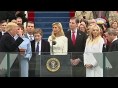
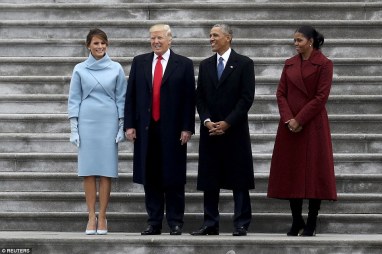
Today, I watched what should always be — and thank God, was today — a celebration by all Americans of an event that for 240 years has occurred once every four years in this country. The focal point of the event itself is the inauguration of a newly-elected President, but the much more important part of the overall sequence of events is a celebration of the peaceful transition of power in this country.

In a way, this post might be considered an epilog to my recent post Illegitimate? Really?.  I’m publishing it because it became even clearer to me today that the thoughts I expressed in that post need expansion on one point: that all Americans, regardless of their personal ideology, and regardless of whether their personal ideology is the same as that of the President or the “party in power”, should consider it their privilege to share in this celebration.

Interestingly, an article in the USA Today section of the [Nashville] Tennessean this morning was a reminder of why we should celebrate this event regardless of whether we are happy or disappointed with the results of the election that gave rise to it.  I refer to this little “Briefs” item:

ETHIOPIA CELEBRATES TIMKAT

TROOPS ENTER GAMBIA TO FORCE OUT JAMMEH

A West African regional force charged into neighboring Gambia late Thursday to support the country’s newly inaugurated president, while longtime ruler Yahya Jammeh showed no sign of stepping down.

The troops moved in shortly after Adama Barrow was inaugurated at Gambia’s embassy in neighboring Senegal, after a final effort at diplomatic talks with Jammeh failed to secure his departure. His mandate expired at midnight. — The Associated Press

Think about that. Here, in America, despite some protests and voices of dissent, a peaceful transition of power has taken place today. No military was required to force the outgoing leader to relinquish that power. He did it voluntarily and graciously because that’s what we do in this great country.

About a third of the Democrats in the House of Representatives boycotted today’s inauguration event. I hope they realize how foolish they looked. To them, and to the Colin Kaepernicks and the property-destroying demonstrators [NOT the peaceful ones], a pox on all of them!

For whatever it’s worth, I would be writing these same thoughts if the shoe was on the other foot from my perspective — i.e., if Hillary Clinton had won the election [regardless, I might add, of whether by Electoral College only or by both it and the popular vote] and had been inaugurated today and a third of Republicans were boycotting this event [or any Republicans, for that matter].

When Democrats, and practically everybody in the media, were so clearly anticipating a Clinton victory last November, they were all with one voice in excoriating Donald Trump for not saying clearly that he would accept the results of the election “no matter what” — their mantra: “The peaceful transfer of power is a bedrock of our system of government”. Well, as Captain Picard [for those who are Star Trek fans will identify with] would say: “Make it so”!

Thanks!

img_7026 img_7043

Charles M. Jones

News [or NNTN?] Circa 2017

fake-news-cartoon

NNTN Then, “News” Now

I’m sure most people in their 40s or older today remember NNTN [Not Necessarily The News], their memories probably stemming more from off-shoot segments on shows such as NBC’s Laugh-In and Saturday Night Live than from the original [which was a satirical sketch comedy that first aired on HBO as a comedy special in 1982, and then ran as a series from 1983 to 1990; the 2004 movie Anchorman was similar in concept, but focused its satire more on the deliverer of the news than its content].

For this blog post, I’m going to start out positing that much of what is called “news” in the media today is remarkably similar to NNTN episodes of the 1980s, the main differences being a) that the talking heads and pundits do a better job of putting on serious faces throughout their shows than did their NNTN counterparts and b) audience laughter is not audible because it occurs in the homes of the viewers rather than in the studio airing the broadcast. As for “journalists” writing for “news”papers and magazines or posting their articles on social media, the serious face part is not as applicable, but content similarities are just as remarkable.

Let’s start with all the mention lately of “fake news” [re: my blog post An Alarming Development]. This term began to catch on recently as there has been more and more media coverage about whether “fake news” cost Hillary Clinton the presidency.  In the above-mentioned post, I got into the potential dangers I can see in continued proliferation of the use of that term — for the simple reason that each news broadcaster/publisher will have a different interpretation of what is “fake” and what is “real”.  In this context, we must keep some key facts in mind:

    • 90 percent of U.S. media is controlled by six corporations [see this link for source]. We can logically assume that they are driven by at least two factors that bring into question their objectivity: 1) their responsibility to their shareholders to maximize profits; and 2) the worldview of their top leadership [i.e., the context within which these leaders make decisions about what does and does not make it into their publications and broadcasts].
    • Information on the amount of material available on the internet is hard to pin down with assurance of accuracy, but these statistics are as accurate as any and serve to make a point: there are well over a billion websites in existence; hundreds of new sites start up every minute; 288 million monthly active Twitter users tweet a combined average of 347,222 times per minute; 1.44 billion monthly active FaceBook users send an average of 31.25 million messages and posts and view 2.77 million videos every minute.
    • Although the exact amount can be argued, scientists in medicine and psychology would agree that there is some finite limit to how much of the information to which the average person is exposed in a given day he/she will retain even at the end of that day, not to mention future days, weeks, months and years.

It is quite possible that the only place a person can go to find truly unbiased news is the uncensored internet; the key phrase being “to find“.  Unfortunately, applying some simple math to the above-mentioned facts clearly reveals that even if the average person spends an hour a day looking for news [which is far more than many sources indicate is the case], he/she decides [consciously or subconsciously] from among at least seven or eight TV channels and literally millions of internet-based sources where to spend that time [and in the latter case, the amount of available content being created per hour is far more than he/she could access by spending only one second on each page clicked on].

So Back To NNTN …

So from this perspective, consider a typical nightly news show on a broadcast or cable TV channel.  Whatever the talking head is reading from his/her teleprompter is the product of the company’s decision-making process for selecting what will and will not be included [after applying their own filter from the sea of possibilities — i.e., a decision has already been made as to what from that “sea” is real, what is fake, what will produce viewers and clicks, etc.].  The talking head has his/her own worldview and perspective, and through voice intonation, facial expressions and body language, affects how the actual content is perceived by many.  The same filtering process applies to print and posted media, the only difference in presentation being choice of words and phrases — and accompanying pictures and images — instead of voice intonation, facial expression and body language.

Comparing this scenario to an NNTN-type episode results in an obvious similarity [same description as above, the only differences being in bold italics]. … Whatever the talking head is reading from his/her teleprompter is the product of the company’s decision-making process for selecting what will and will not be included [after applying their own filter from the sea of possibilities — i.e., a decision has already been made as to what from that “sea” is funny and entertaining, what will produce viewers and clicks, etc.].  The talking head has his/her own worldview and perspective, and through voice intonation, facial expressions and body language, and perhaps some off-script content injections affects how the actual content is perceived by many.  The same filtering process applies to print and posted media, the only difference in presentation being choice of words and phrases — and accompanying pictures and images — instead of voice intonation, facial expression and body language.

Part Of Paradigm Shift

This fundamental change in “the media” — what it is structurally, how it is perceived, and how it can be used to influence public opinion — is simply one more piece of evidence confirming that a major paradigm shift is underway not only in America, but in the world [see A Major Paradigm Shift Well Underway; Election Aftermath – 1].  Evidence of this shift over the past two decades has been clearer and more visible in industry [manufacturing, mining, retailing, banking, etc. — and the entertainment component of the media].  Over the past two years, largely as a result of one of the most if not the most unusual presidential election campaigns in our history, evidence of it in politics and the news component of the media have moved to front and center.

So Where Can One Turn To Get Real News?

As I mentioned in my What I learned as a Boy Scout post, I believe all American citizens have an obligation to keep themselves informed about the issues of the day so they can vote intelligently in all elections at all levels of government. Only two things give a person the ability to develop truly well-informed positions on the issues: 1) personal choices of “channels” to access [“channels” here being much broader than the TV/YouTube connotation]; and 2) personal filters, based on his/her value system and Worldview, applied to the content flowing through those “channels”. Anyone who limits the first to just one or two channels and/or who essentially delegates the second to just one or two “trusted consolidators” runs a substantial risk of simply disappearing into the huge crowd of what one popular radio personality calls “low information voters”. Anyone who takes whatever time is required [whether he/she thinks he/she has that much time available or not] to control both of these things himself/herself will always be a part of making things better than they are. It’s a hard choice, but the greater the “flow” of people from the latter category to the former, the more rapid our drift toward authoritarianism will be.

Thanks!

img_7026 img_7043

Charles M. Jones

Illegitimate? Really?

On the eve of this day when we honor a man I believe was one of the greatest people of modern times, I was appalled when I saw news coverage of a sitting U.S. Representative saying “I don’t see this president-elect as a legitimate president”. This statement came from John Lewis, the Representative from Georgia’s 5th District [which includes the Atlanta area], on NBC’s Meet The Press program.

Note. … I am nearing completion of my regular weekly post, and will publish it on the usual mid-week schedule. I simply could not let this deplorable situation pass, however, without at least expressing my very negative view of it.

I know what a Civil Rights icon Congressman Lewis is, and I know that if I were a better-known commentator I’d be excoriated in the media as a racist for saying this, but this man has greatly reduced his own stature in my eyes. Clear proof that Lewis’ remark was pure politics is the fact that he took the opposite position last year when taking issue with people speaking disparagingly of President Obama — “Even if Obama’s critics don’t like him as a person, they should at least respect the position” [2016 interview on CNBC].

I grew up in the Deep South [Louisiana], and my preteen through high school years were in the late 1950s to early 1960s. That piece of information would cause many people who don’t know me to think that I’m just another white man putting down on a black man. Although the times, and to a considerable extent the region, of my upbringing exposed me to the racial divide that existed in those days, my upbringing was one that rose above all that and caused me to be just as appalled over racist activities as anybody from the North or the Midwest could possibly have been. My father was a school superintendent, and by his words, his demeanor and his actions, he was responsible for all schools in the parish, not just the white schools. In the excellent home environment that he and my mother provided, I developed an attitude of respect for people regardless of their race.

I say that simply to say that my repudiation of Congressman Lewis’ remark has absolutely nothing to do with his race. In fact, he and many other [certainly not all] black people in leadership roles these days are responsible for what, in many ways, is a worse racial divide than the one of my formative years. But maybe this scenario can end up being constructive. One way that outcome could come about would be for a considerable number of black leaders to take the high road and put their country above their politics and their sour grapes and let this inauguration be what it is supposed to be — a celebration of the peaceful transfer of power that is a bedrock of our country’s system of government [interestingly, that’s the way Democrats described this week when they were confident last November of a Clinton victory].

So in the spirit of what our country has been and hopefully has not completely lost, and in remembrance of the great man we honor today and the hope that those of his ilk will prevail over those of Representative Lewis’ ilk, let me close by saying that I hope everybody reading this has had a happy Martin Luther King Day.

Thanks!

img_7026 img_7043

Charles M. Jones